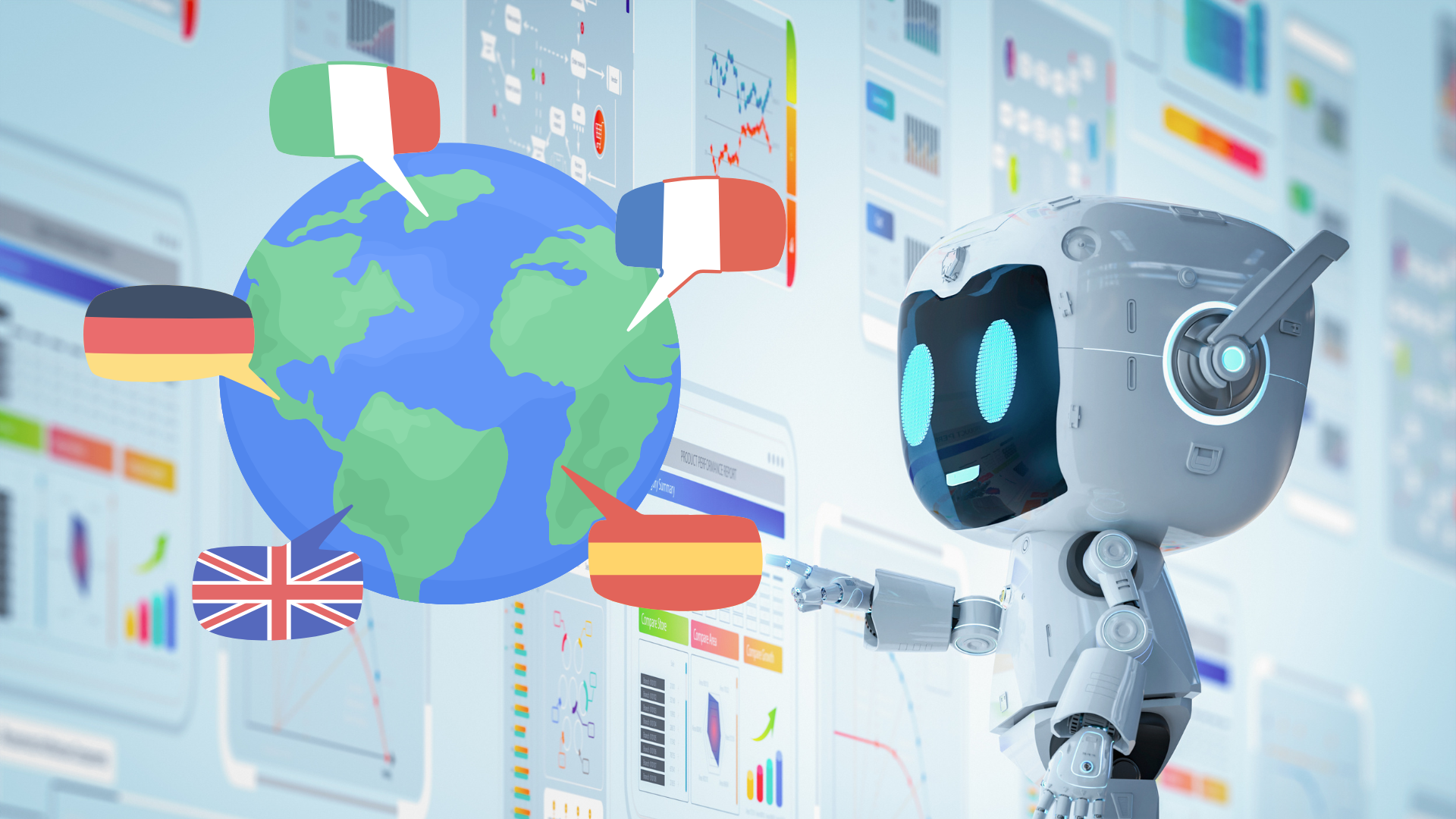
Compare 10 leading VoIP phone call translation solutions including Zoom Phone, Microsoft Teams Phone, and AI-powered tools for multilingual customer support.
With the growing number of inbound tourists and the global expansion of businesses, the demand for multilingual support is higher than ever. Among the various communication channels, phone calls are particularly challenging due to their urgency and need for real-time response. Many on the front lines are finding that traditional methods involving human interpreters are reaching their limits.
In response, “VoIP Phone Call Translation” has emerged as a promising solution—automatically translating conversations in real time to streamline multilingual communication. In this article, we’ll explore how VoIP call translation works, the key benefits it offers, and introduce 10 leading solutions ideal for multilingual call centers.
What Is a Multilingual Call Center?
A multilingual call center is a customer support hub that assists not only in English but also in multiple languages such as Japanese, Chinese, and Korean.
In recent years, with the rise in inbound tourism and the global expansion of businesses, inquiries in foreign languages have increased across various sectors—tourism, healthcare, local governments, transportation, and infrastructure, to name a few. As a result, the adoption of multilingual call centers is rapidly gaining momentum.
Providing reliable service that transcends language and cultural barriers is essential for enhancing customer satisfaction and maintaining competitiveness in today’s global market.
The Connection Between Multilingual Call Centers and VoIP Call Translation
Traditionally, multilingual call centers have relied on human interpreters or hiring native-speaking staff to handle foreign language inquiries. However, this approach often involves high costs, scheduling challenges, and limited scalability.
This is where VoIP call translation comes into play. By leveraging real-time translation technology during phone conversations, VoIP solutions enable even English-speaking agents to communicate effectively with non-English-speaking customers. This not only reduces the need for dedicated multilingual staff but also enhances responsiveness and efficiency.
Integrating VoIP call translation into a multilingual call center can significantly lower operational costs, improve customer satisfaction, and provide a scalable solution for global communication needs.
When Are Multilingual Call Centers Most Effective?
Multilingual call centers play a crucial role in the following scenarios:
Inbound Tourism Support (Tourist Attractions, Hotels, Airports, etc.) — For assisting foreign visitors with directions, reservations, or emergency situations.
Medical Support for Foreign Patients — Accurate communication is essential when gathering symptom details, scheduling appointments, or explaining insurance coverage.
Multilingual Services at Local Governments and Public Offices — For handling administrative procedures, disaster response information, or daily life consultations for foreign residents.
Customer Support for Cross-Border E-Commerce Sites — To handle purchases, returns, and shipping inquiries from international users smoothly.
B2B Negotiations and Support for Global Enterprises — For providing product support and technical explanations in highly specialized fields when dealing with overseas partners.
International Customer Support via VoIP Phone Systems — By integrating real-time translation into existing VoIP infrastructure, businesses can conduct seamless B2B/B2C phone calls with overseas clients—without overhauling current systems.
4 Common Approaches to Running a Multilingual Call Center
Multilingual call centers are typically operated using one or a combination of the following four approaches:
In-House Multilingual Staff
Hiring and training multilingual staff within the company. This allows for shared company culture and flexible response, but securing and retaining skilled personnel can be challenging.
External Interpretation Support (Interpreter-Insertion Model)
Using a third-party interpreter during customer calls, often via three-way calling. This allows multilingual support without changing existing workflows but can result in slower response times.
Outsourcing Entire Customer Support Operations (BPO Model)
Delegating all multilingual customer interactions to an external call center specializing in language support. While this ensures high-quality service, maintaining consistent communication and quality standards can be difficult.
AI-Powered Automated Translation
Utilizing AI voice recognition and translation to respond in real time via voice or chat. This approach minimizes the need for human involvement, reducing costs while improving response speed. However, accuracy with technical terms or nuanced communication may require additional tuning. Recently, voice translation features that integrate directly with VoIP systems have emerged, enabling real-time translation of phone conversations.

Benefits of Multilingual Contact Centers and VoIP Phone Translation Services
Introducing a multilingual call center brings far more advantages than simply enabling communication in foreign languages. It also contributes to improved customer service quality, greater operational efficiency, optimized costs, and enhanced global competitiveness.
1. Improved Customer Satisfaction
Smooth communication in a customer’s native language provides a sense of reassurance, especially in stressful situations like making hotel reservations or visiting a hospital. Accurate and clear interaction reduces anxiety and leads to higher satisfaction levels.
2. Increased Efficiency and Faster Response Times
With AI-powered translation solutions, operators can handle calls in multiple languages in real time—without the need to coordinate with interpreters or set up three-way calls. This significantly shortens handling time per inquiry.
3. Cost Reduction and Less Reliance on Specialized Staff
Traditional interpretation methods often require hiring or outsourcing language specialists for each language, leading to high costs. By adopting AI translation or BPO-style solutions, companies can reduce labor costs while building a more flexible, on-demand language support system.
4. Strengthened Global Readiness
For companies targeting inbound tourism recovery or international market expansion, multilingual support is a critical competitive advantage. Multilingual customer support can build trust with overseas customers and avoid missed sales opportunities.
6 Key Checkpoints When Choosing Multilingual Call Center Services
When considering the implementation of a multilingual call center, it’s essential to select a solution that aligns with your business operations and customer needs:
- Real-Time Translation Capability — Can it translate conversations as they happen?
- Accuracy of Speech Recognition and Translation — How well does it handle accents and specialized terminology?
- Language Coverage — Does it support the languages your customers speak?
- Integration with Existing Systems — Can it connect with your current PBX, CRM, or VoIP infrastructure?
- Security and Privacy Compliance — Does it meet HIPAA, GDPR, or other regulatory requirements?
- Cost of Implementation and Operation — What are the upfront and ongoing costs?
Recommended VoIP Phone Translation & Interpretation Services
App & Cloud-Based Solutions
1. Zoom Phone

Zoom Phone is a cloud-based IP telephony service offered by Zoom. Available in over 40 countries, it provides a global voice communication infrastructure and is increasingly being adopted for multilingual business support.
While Zoom Phone itself does not offer built-in translation features, it supports a wide range of third-party integrations through the Zoom App Marketplace and APIs. This allows organizations to incorporate real-time translation or interpreter support via add-ons.
Supported Languages: Expandable via integrations (English, Chinese, Spanish, etc.) Translation Type: AI-based translation or live interpreters depending on integration Key Features: Cloud PBX, call recording, call log management, third-party service integration Use Cases: Global enterprises, educational institutions, healthcare providers, government agencies Pricing: From approx. $15/month per user; translation services priced separately
Website: zoom.com/products/voip-phone
2. Microsoft Teams Phone

Microsoft Teams Phone extends the calling capabilities of Microsoft Teams to create a cloud-based business phone environment. It allows businesses to unify internal and external voice communications within Teams.
Although Microsoft Teams Phone does not include built-in AI translation features, it can be integrated with Microsoft Azure Cognitive Services to enable customized workflows for speech recognition, translation, and transcription.
Translation Type: AI translation via Azure or live interpreters (real-time or post-call) Key Features: Voice calling, call recording & transcription, cloud PBX, conversation analytics Use Cases: Large enterprises, government agencies, educational institutions, healthcare providers Pricing: From approx. $12/month per user (Teams Phone Standard)
Website: microsoft.com/microsoft-teams-phone
3. Cisco Webex Calling
Cisco Webex Calling is a cloud-based business IP phone service designed with enterprise-grade security and scalability. With a strong global track record, it serves as a reliable solution for medium to large organizations.
For multilingual support, pairing with Webex Contact Center enables a robust environment combining voice bots, real-time transcription, and third-party translation services.
Supported Languages: Expandable via third-party integrations Key Features: Cloud PBX, call recording, auto-attendant, integration with meetings and messaging Use Cases: Global enterprises, government bodies, educational institutions, healthcare and finance Pricing: From $8.95/month per user (Webex Calling Essentials)
Website: webex.com/suite/enterprise-cloud-calling
4. Dialpad
Dialpad is a next-generation, AI-powered cloud business phone solution. The platform offers a unified suite of services—voice calls, video conferencing, chat, and contact center functions.
Its standout feature is real-time AI speech recognition with live transcription and conversation summaries. During a call, conversations are transcribed in real time by AI, which can then be used for translation.
Supported Languages: Japanese, English, Chinese, Spanish, French, and more Translation Type: AI speech recognition + real-time transcription + external translation integrations Key Features: AI transcription, conversation summaries, CRM integration, real-time FAQ suggestions Use Cases: Companies like Google, Xero, WeWork Pricing: From $15/month (Standard)
Website: dialpad.com
5. AI Phone
AI Phone is a smartphone-based IP telephony app that leverages AI-driven voice translation technology. Supporting over 90 languages, it enables smooth communication between speakers of different languages by translating calls in real time.
Supported Languages: 90+ languages including Japanese, English, Chinese, Korean, Vietnamese, Spanish Key Features: Real-time call translation, AI-powered call summaries, call recording, automatic transcription Use Cases: Inbound tourism services, international sales, language learning Pricing: Subscription and pay-as-you-go options available (from approx. $10/month)
Available on: App Store and Google Play
6. VoicePing
VoicePing is a real-time voice translation solution focused on providing multilingual simultaneous interpretation for video conferencing and online meetings. It integrates with existing platforms such as Zoom and Google Meet, offering real-time voice translation and subtitle display.
Looking ahead, VoicePing plans to expand with “VoicePing IP,” which will enable real-time voice translation for both phone and PC-based calls.
Supported Languages: 45 languages including Japanese, English, Chinese, Korean Translation Type: Currently: AI voice translation for video meetings; Coming soon: AI voice call translation (VoIP + PC) Key Features: Real-time subtitles, speaker identification, meeting transcription, AI-generated summaries Use Cases: IT companies, manufacturers, educational and research institutions Pricing: Free plan available; Paid plans start at $35/month
Website: voice-ping.com
7. Ooma Office
Ooma Office is a cloud-based VoIP phone service designed primarily for small to medium-sized businesses. Known for its simple user interface, reliability, and excellent cost performance.
While real-time translation is not natively included, Ooma can be integrated with third-party voice translation tools or used with recording + transcription + external translation APIs.
Supported Languages: Primarily English; multilingual support available via third-party integrations Key Features: Cloud PBX, auto-attendant, mobile app support, voicemail forwarding, SIP trunking Use Cases: U.S.-based small businesses, retail shops, medical/legal offices Pricing: From $19.95/month
Website: ooma.com/office
Human Interpreter-Based Solutions
8. CyraCom
CyraCom is a leading provider of phone and video interpretation services, specializing in professional, HIPAA-compliant interpretation for the healthcare, insurance, and customer service sectors. CyraCom offers services in over 250 languages.
Supported Languages: 250+ languages including Spanish, Mandarin, Vietnamese, Russian, French Translation Type: On-demand human interpretation via phone and video platforms Key Features: HIPAA compliance, fast interpreter connection, healthcare-focused training Use Cases: Hospitals, clinics, insurance firms, contact centers, public health organizations Pricing: Usage-based pricing; enterprise plans available
Website: cyracom.com
9. Propio Language Services
Propio Language Services offers a wide range of human interpreter-based solutions including over-the-phone interpretation (OPI), video remote interpretation (VRI), and on-site interpretation in more than 300 languages. Available 24/7.
Supported Languages: 300+ languages including Spanish, Mandarin, Arabic, Vietnamese, Russian Translation Type: On-demand human interpretation via phone, video, and on-site appointments Key Features: 24/7 availability, sub-10-second connection time, HIPAA-compliant Use Cases: Hospitals, 911 call centers, public agencies, financial services, educational institutions Pricing: Per-minute or customized enterprise pricing
Website: propio.com
10. LanguageLine Solutions
LanguageLine Solutions is one of the world’s largest interpretation service providers. The company offers on-demand phone interpreting, video interpreting, and document translation in over 240 languages. Available 24/7/365.
Supported Languages: 240+ languages including English, Spanish, Chinese, Arabic, Japanese Translation Type: On-demand human interpretation via three-way phone calls Key Features: 24/7 interpreter access, industry-specific professionals, secure call handling Use Cases: U.S. government agencies, hospitals, insurance companies, educational institutions, banks Pricing: Pay-per-minute billing; varies by contract
Website: languageline.com
Conclusion
With the rise in inbound tourism and the global expansion of business, multilingual support has become an essential challenge for both companies and public institutions. In particular, phone-based communication demands immediacy and accuracy—making AI-powered VoIP translation solutions an increasingly attractive option.
As AI technology and telecommunications infrastructure continue to evolve, we can expect even more natural and accurate real-time call translation in the near future. Regardless of industry or company size, selecting the right solution tailored to your needs can dramatically enhance your customer communication capabilities in today’s globalized world.
Why VoicePing?
VoicePing comes with built-in meeting and voice translation features, eliminating the need to juggle multiple apps or integrate external tools. Its proprietary speech-to-text and translation learning models ensure high accuracy, fast processing, and seamless meeting transcription—making it a powerful solution for global business communication.
Try VoicePing free and experience how it can transform your multilingual communication.
![24 Best Chinese Voice Translation Tools for Business and Travel [2025]](/images/blog/en/chinese-translation-featured.png)