In this article
An evidence-led evaluation of whether OpenAI Codex can carry bounded objectives through development, browser QA, analytics, remote work, automation, and human review.
Abstract
Objective: evaluate OpenAI Codex as an agent harness, not only as a coding agent. We examine public-safe evidence across browser QA, analytics, Remote SSH, coordination, and automation. The main benefit is continuity from objective to evidence across tools and machines; permissions, stopping rules, and human approval remain essential.
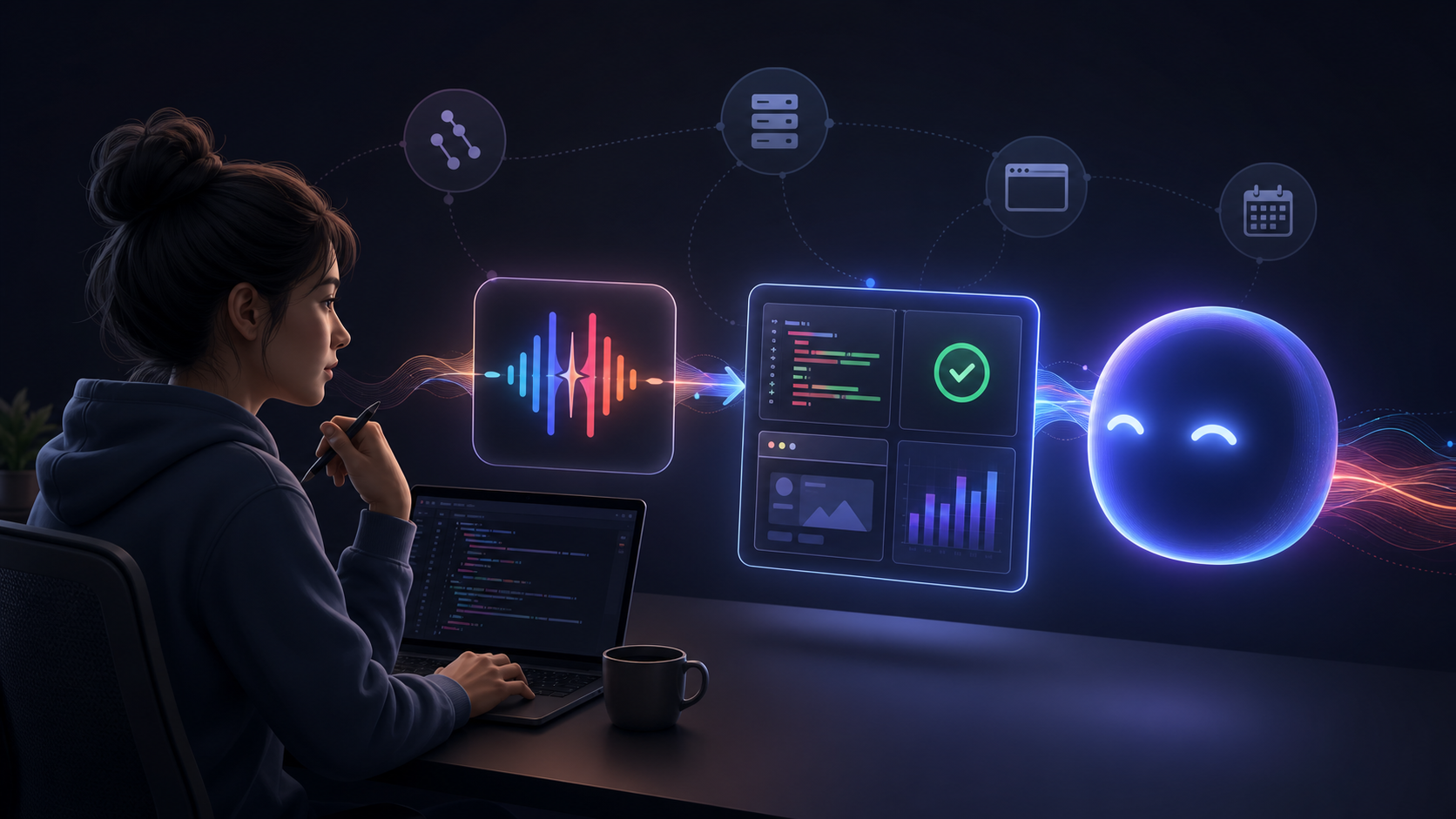
The usual misconception is that Codex is a faster place to request snippets. Code can be an output, but the more consequential capability is coordinating the work around it: research, planning, browser inspection, data transformation, visual explanation, verification, and handoff. The research question is simple:
Can a bounded objective travel from intent to reviewable evidence without a person manually rebuilding the context at every step?
The agent-harness loop
An agent harness is the operating layer around the model: it supplies context, tools, permissions, checkpoints, and evidence. The loop begins with an outcome and guardrails, then gathers the relevant context, executes a bounded change or analysis, verifies the result, returns evidence, and stops for a decision. A useful result may later become a reusable procedure or scheduled task.
This differs from a chain of isolated prompts because the acceptance criteria survive the tool changes. In a legacy flow, a person moves an issue through an editor, terminal, browser, database client, screenshots, and a report. In the agentic flow, the person defines the outcome and boundaries, while the harness carries operational context through approved tools. The person still owns permissions, interpretation, and release decisions.
| Legacy routing | Agent-harness routing |
|---|---|
| Context is copied between tools | The objective and constraints remain attached |
| QA is reconstructed near the end | Acceptance evidence is defined at the start |
| Proof is assembled after execution | Evidence and uncertainty return with the result |
A real Discord-to-Codex goal contract
Goal. Move a reported macOS login-focus defect from Discord intake to reviewable engineering evidence. ActivityMonitor opens a dedicated issue thread and queues a bounded task; a Codex-backed worker runs in the background while Discord becomes the progress surface.
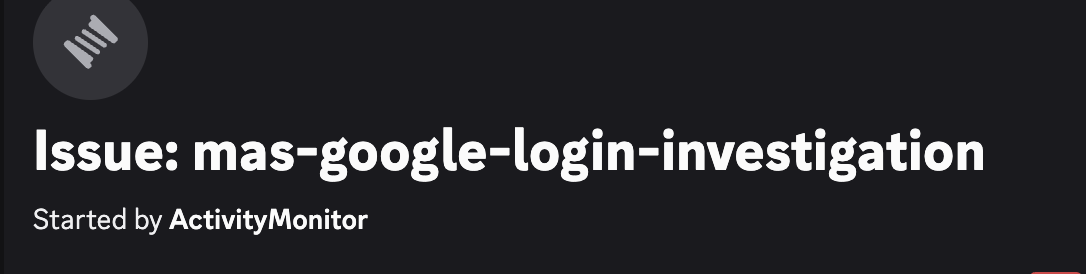
Figure 1, step 1. ActivityMonitor creates the case thread. This proves a workflow started, not that classification was correct.
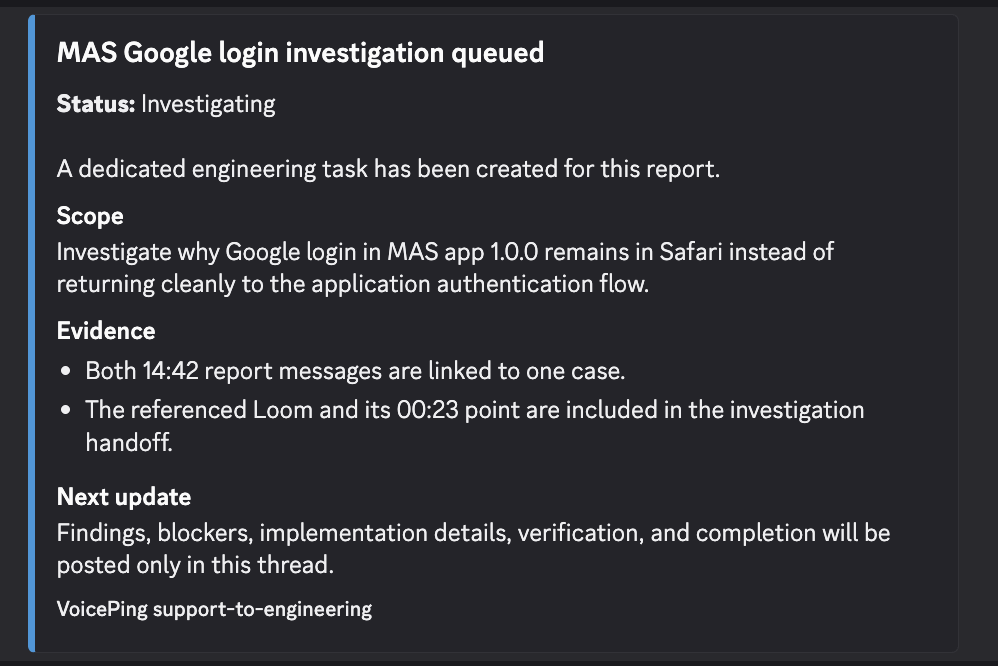
Figure 1, step 2. The agent records scope and evidence before implementation, creating a reviewable goal contract.
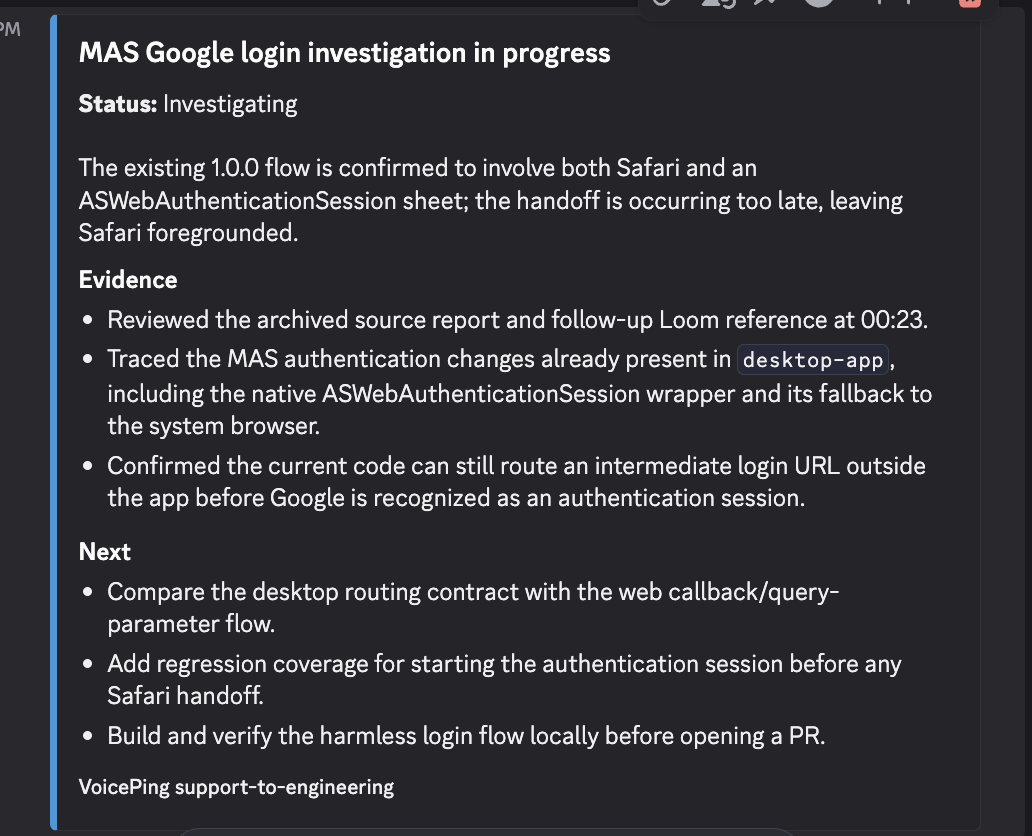
Figure 1, step 3. Execution evidence records what the agent inspected, what it confirmed, and which checks must happen before a PR is opened.
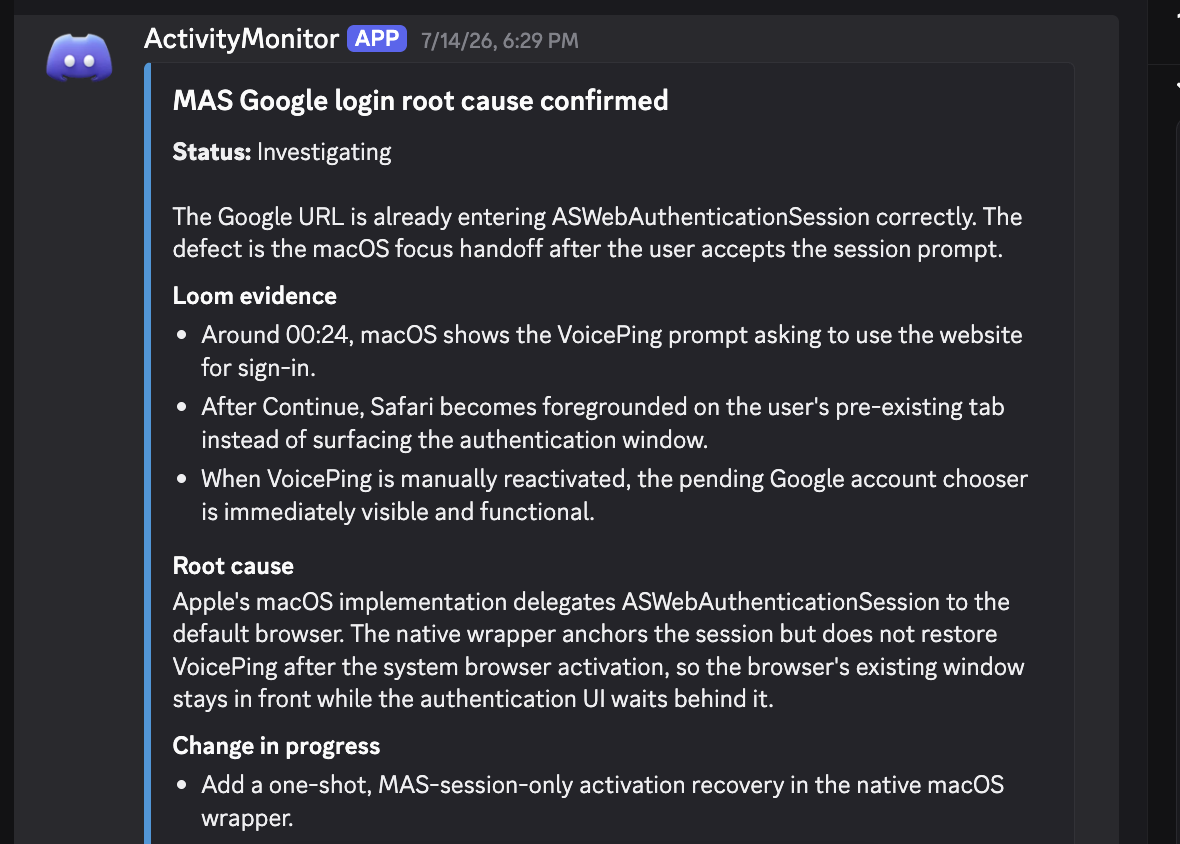
Figure 1, step 4. The update separates observed behavior, root cause, and the bounded change in progress.
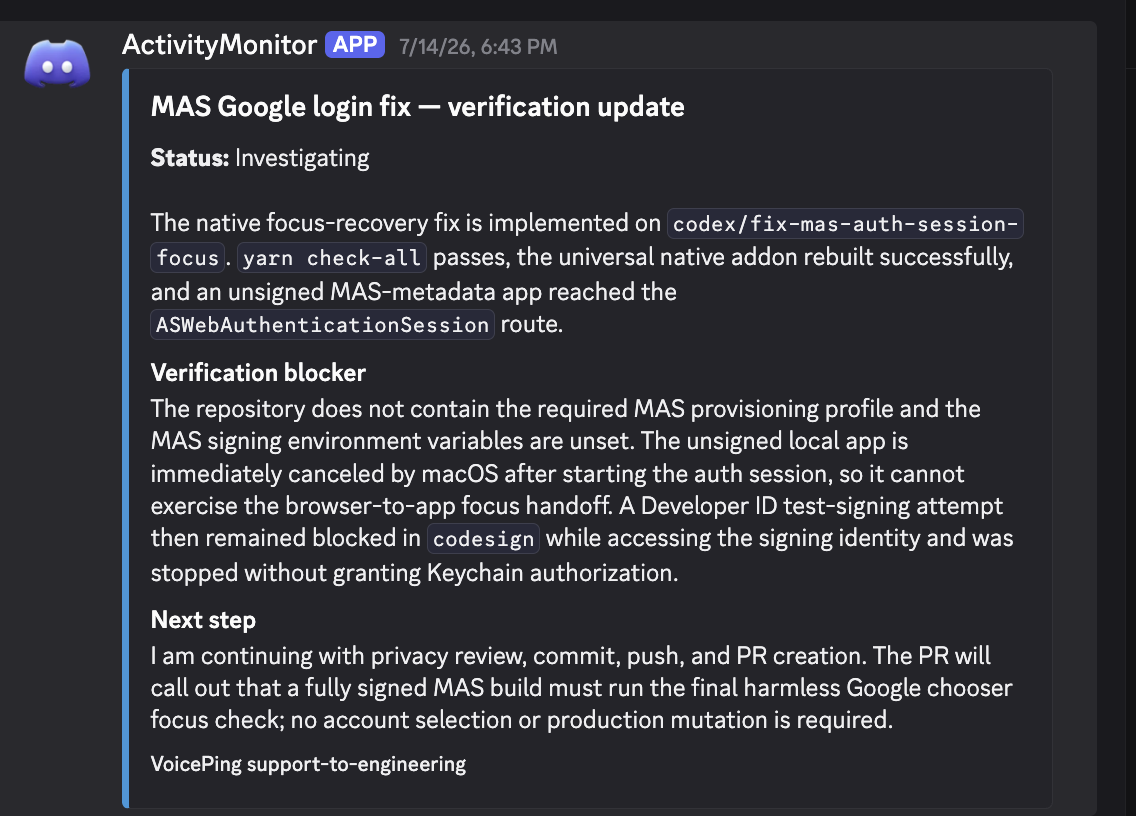
Figure 1, step 5. Verification reports passed checks and the signed-build blocker instead of saying “done.”
Execution and evidence. The operational loop is trigger, scope, investigate, change, verify, and report. Its messages preserve the issue, evidence, finding, checks, blocker, and next action. Automated checks and an unsigned build passed; the final signed macOS behavior check could not run in that environment.
Human checkpoint and limitation. A person reviews scope, authorizes signing access, performs the final login-focus check, reviews the draft PR, and decides whether to merge. One real sequence does not establish that every Discord report can be classified, fixed, or verified without supervision.
Automated development and browser QA
Goal. Move a UI issue through reproduction, investigation, a bounded change, and verification without losing the expected behavior. A passing unit test cannot prove that a control is visible, reachable, or correct in the real product surface.
What the harness coordinates. The built-in browser keeps the page inside the desktop app so the user and Codex can work from the same review surface, move across tabs, and attach annotations. Codex can navigate an approved route, inspect visible page state, and collect screenshots. Computer Use covers interactions that depend on visual position, native controls, or another desktop app: it can see, click, and type, while the user can follow the run. OpenAI’s official Codex use cases describe QA with Computer Use as clicking through product flows and logging what breaks.
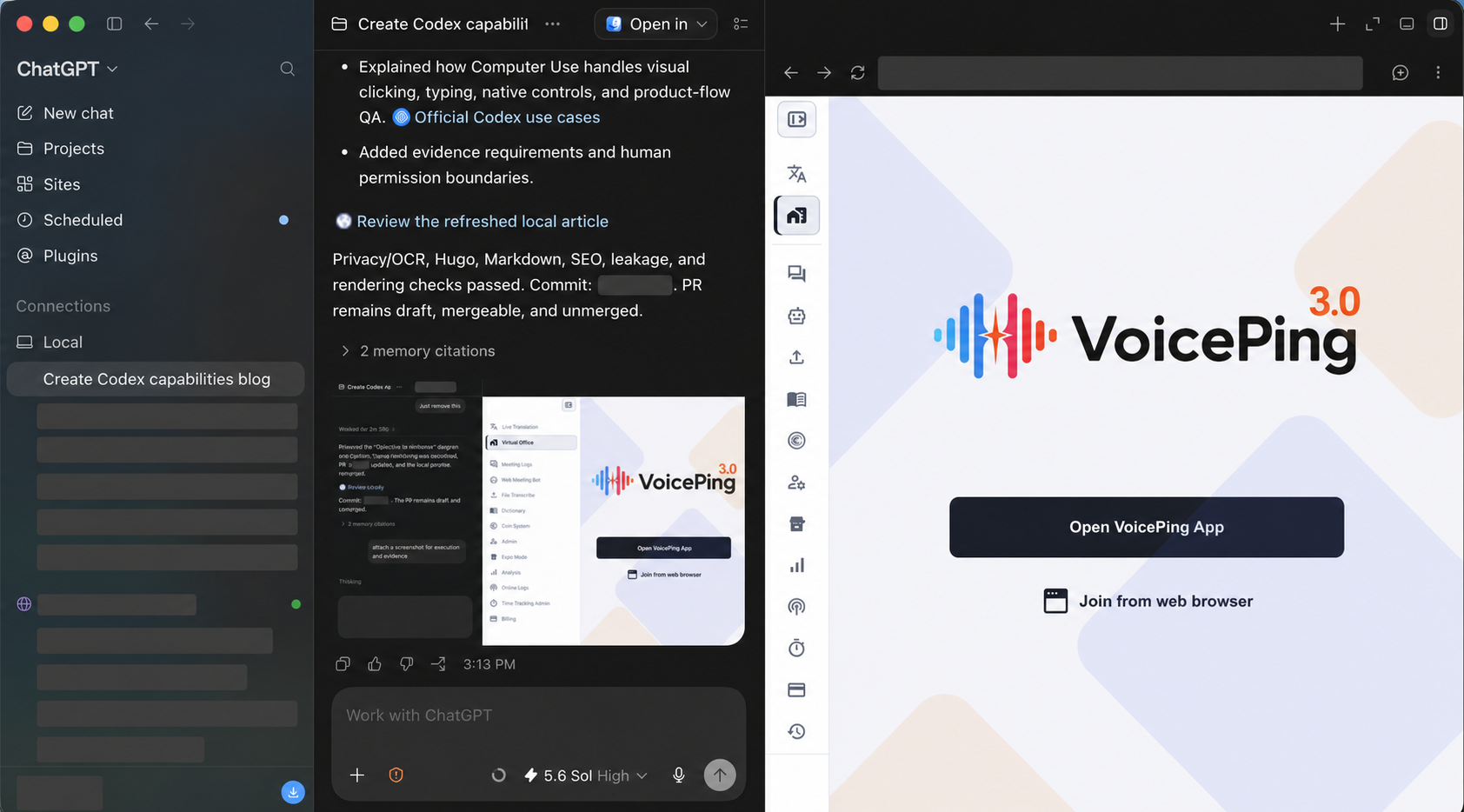
Figure 2. Full-workspace view of Codex and the in-app browser operating side by side. Private connections, account details, URLs, unrelated tasks, PR data, and commit identifiers are masked. It proves that Codex can share and interpret the visible QA surface; it does not prove autonomous completion.
Execution. Start with a testable condition, such as opening the target dashboard, reaching the intended control, and confirming its visible state. The in-app browser handles navigation, tab context, page inspection, and annotations. Computer Use is useful when the next step is primarily visual—for example, clicking a canvas control, opening a native picker, or moving between the browser and a desktop window. Reproduce the problem before editing, record the route and viewport, trace the relevant implementation, apply the smallest change, and run focused checks.
Then repeat the same flow. Capture the original behavior, the bounded change, and the verified after-state at the same viewport. An annotation should point to the evidence rather than cover it.
Evidence. A credible package includes the route, viewport, reproduction steps, selected annotations, focused test output, after-state screenshot, and unresolved warnings. It preserves exact errors instead of reducing them to “the page broke.”
Human checkpoint and limitation. Site access, sign-in, sensitive data, destructive actions, deployment, and merge authority remain explicit. The capture does not show a measured QA success rate, and visual judgment or ambiguous requirements still need a person.
Business analytics as insight discovery
Goal. Answer a business-development question with traceable evidence: where does an example lifecycle lose momentum, and what should the team investigate next? This is deeper than generating a query or chart. It requires data lineage, definition alignment, reconciliation, and a boundary between observation and causality.
What the harness coordinates. With approved read-only access, the workflow can map acquisition, account, product-activity, subscription, and cancellation sources. It can inspect schemas, normalize time zones and identifiers, document inclusion rules, and join events into an example journey. Access must be deliberately scoped; database connectivity is not implied by the model itself.
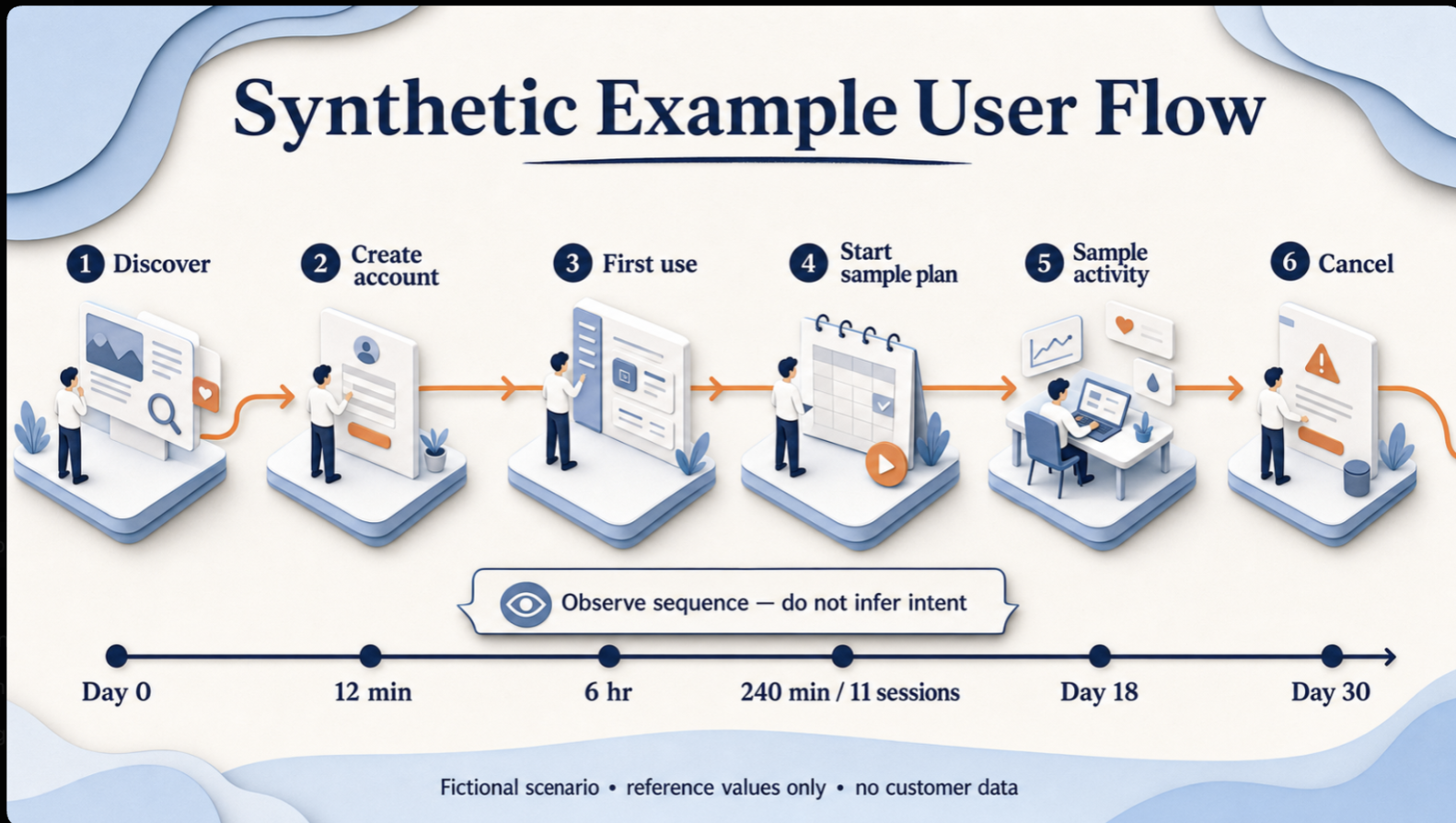
Figure 3. Fully synthetic reference journey. It proves the source-to-insight method; every value is fictional and it does not identify a customer or explain intent.
Execution. Begin with definitions. Does “activation” mean account creation, first transcript, or a minimum amount of useful activity? Is cancellation the request date or paid-period end? Which source owns each timestamp? The workflow should reconcile source totals before interpretation and flag unmatched records, duplicates, late events, and definition changes.
The reconstructed example then becomes a review surface, not a verdict. Suppose an example user reaches first value after 12 minutes, starts a sample plan after six hours, records 240 reference minutes across 11 sessions, and later has a ten-day activity gap before scheduling cancellation. Those fictional numbers illustrate connected evidence. They do not establish a real benchmark.
Evidence. The observable signals are rapid activation, early repeated use, and a later gap. The safe finding is that the journey lost momentum after initial value. The unsafe leap is “the user left because the product was not valuable.” The event record has no verified exit reason, so the analysis must say reason not captured.
| Observed in the reference events | Not established by those events |
|---|---|
| Rapid activation and repeated early use | The user’s reason for adopting the product |
| A later ten-day activity gap | Why activity stopped or cancellation followed |
At segment level, the same method can compare example cohorts by acquisition path, activation definition, feature adoption, or time-to-value. Useful next actions might include an exit interview, a funnel comparison, a post-value retention experiment, or a check for operational friction during the silent period. Each recommendation should trace back to an observed signal and state what new evidence would confirm or reject it.
Human checkpoint and limitation. Product and business owners decide which definition matters, whether a segment is commercially meaningful, and which experiment is ethical and worthwhile. Codex can accelerate business-insight discovery by connecting evidence and exposing unanswered questions. It cannot infer customer intent from events alone or turn correlation into causation.
Remote SSH and cross-task orchestration
Goal. Coordinate local analysis, remote compute, and publishing work without copying private machine context into one giant conversation. OpenAI’s Remote connections documentation explains that remote project tasks run against the selected host’s filesystem and shell. OpenAI also describes the app as a command center where agents run in separate tasks while retaining their own context.
What the harness coordinates. One task can own the local code trace, a second can run a fixed experiment on approved remote compute, and a third can validate the publication bundle. The supervising task receives a compact handoff: objective, host role, artifact paths, checks, blocker, and pending approval.
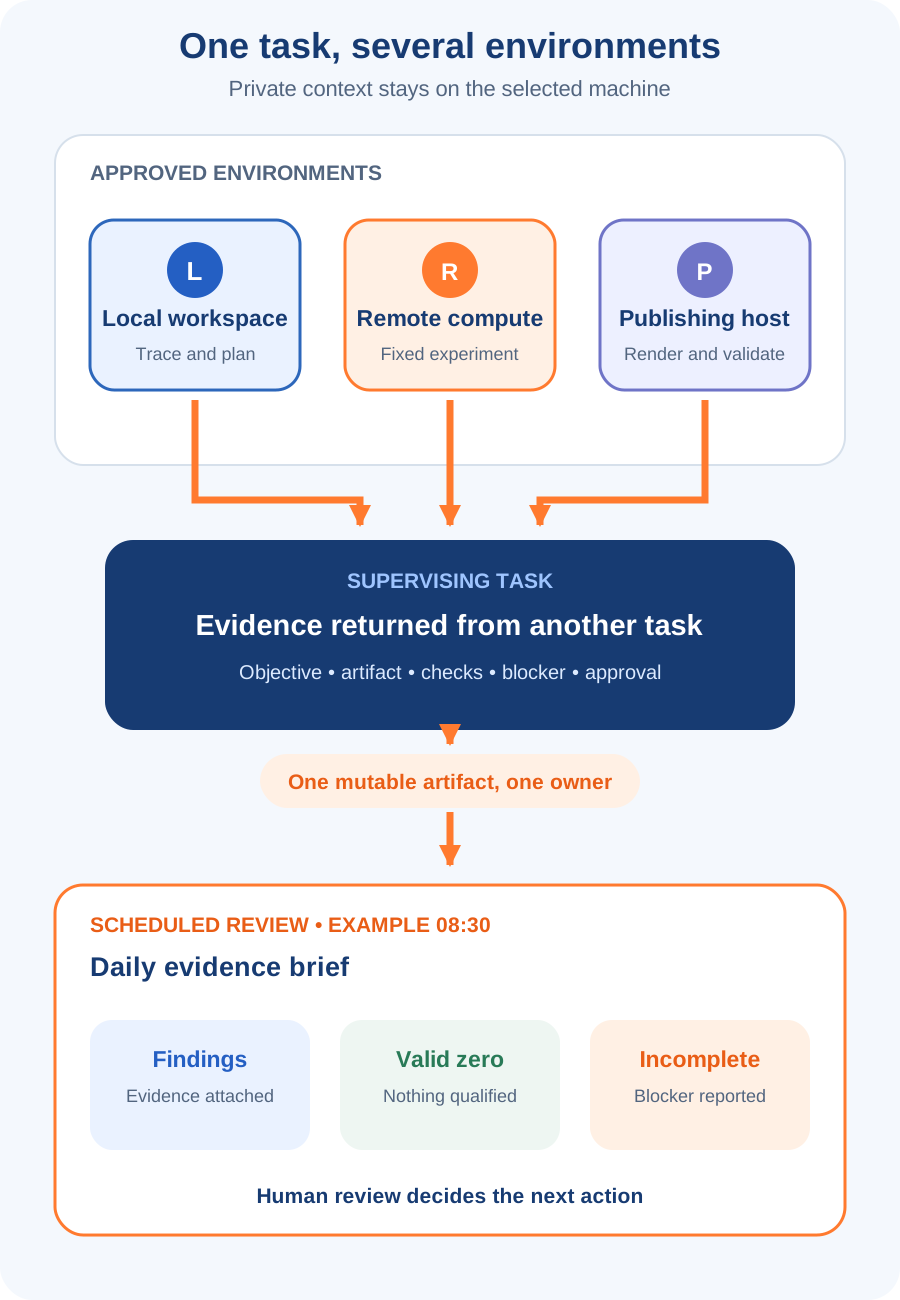
Figure 4. Recreated operating model using functional host labels. It demonstrates evidence handoff and scheduling; it does not expose internal aliases or prove autonomous subagent behavior.
Execution and evidence. Files, credentials, dependencies, and permissions stay on the selected machine. Evidence returns as diffs, logs, metrics, screenshots, or a structured status—not as an undocumented “done.” This is a practical form of agent orchestration, but a cross-task marker does not by itself prove autonomous subagent semantics.
Human checkpoint and limitation. Every mutable artifact needs one owner. Handoffs must preserve blockers and state whether the next action is analysis, commit, push, deployment, or evidence only. Remote access saves context rebuilding; it also increases the cost of vague authority. Private host details should never be copied into a public report merely to make the workflow look concrete.
Scheduled automation with reviewable states
Goal. Turn a stable, repeatable workflow into a schedule—for example, a daily engineering evidence brief—without treating silence as success. OpenAI’s Scheduled tasks documentation describes recurring background work whose runs return to a review inbox.
Execution. Define approved sources, stable filters, the schedule, freshness rules, and a review queue. The output contract must distinguish three states: qualifying findings, a valid zero-result run, and a failed or incomplete scan. The last state needs a blocker and recovery path; it must not be reported as “nothing found.”
Evidence. Each run returns the coverage window, source status, applied filters, deduplication rule, findings, and failures. The evidence strip in Figure 4 shows the compact version: scheduled run, three explicit outcomes, and human review.
Human checkpoint and limitation. A person approves downstream action and periodically revalidates the rules. Scheduling makes work repeatable; it does not make changing data sources, stale permissions, or ambiguous filters trustworthy.
Limitations and the next generation
The current gaps point to product improvements, not reasons to abandon the workflow. Better orchestration visibility should show task ownership, host role, dependencies, latest evidence, and pending approvals in one view. Permission controls should become finer by directory, database role, domain, action, and time window. Automations need stronger freshness and failure monitoring. Evidence packages should be exportable, and large diagrams or documents need visual QA at their real destination size.
These are a wishlist for “Codex 5.7 and later,” not an announced OpenAI roadmap. Capability also does not erase organizational work: teams still need source definitions, repository rules, privacy review, and accountable owners.
The practical shift is from manually operating every tool to defining and supervising outcomes. OpenAI Codex is most convincing beyond snippets when it preserves the contract across the work: what was requested, what it touched, what happened, what proves the result, what remains uncertain, and where a person must decide.
Sources
- OpenAI, Introducing the Codex app , February 2, 2026.
- OpenAI, Running Codex safely at OpenAI , May 8, 2026.
- OpenAI, Work with Codex from anywhere , May 14, 2026.
- OpenAI, Codex changelog , May 21, 2026 update.
- OpenAI, Remote connections , accessed July 22, 2026.
- OpenAI, Scheduled tasks , accessed July 22, 2026.
- OpenAI, Codex is becoming a productivity tool for everyone , June 2, 2026.