In this article
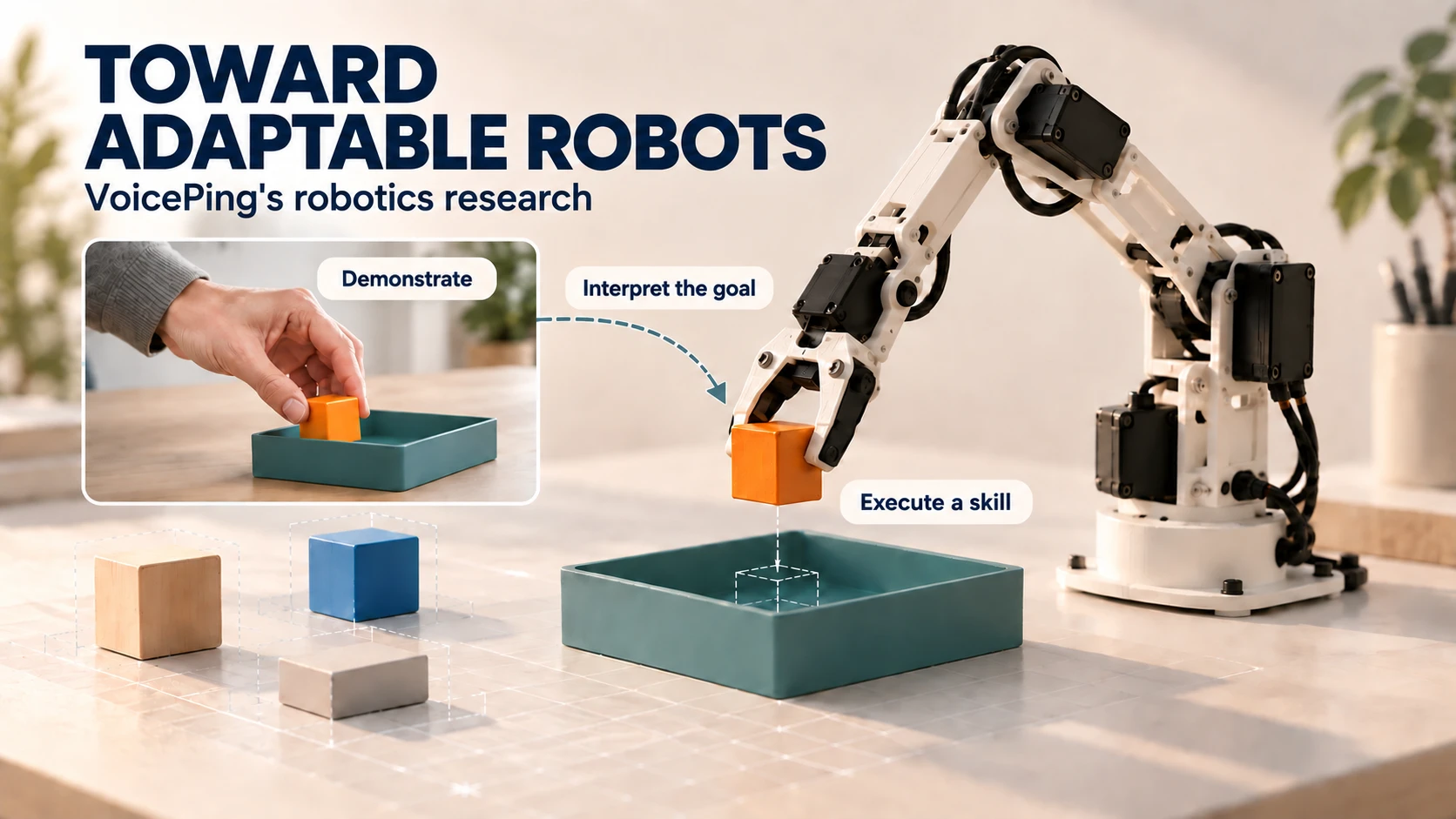
At VoicePing, our longer-term goal is to build robots that understand a useful task, act in the physical world and adapt when the situation changes. If every new room, route or small variation requires a separate training effort, deployment becomes difficult to scale.
Our robot-dog project gives us a way to investigate how mechanics, sensing and learned control support that goal—and where their limits appear in physical trials.
A useful robot must handle a changing situation
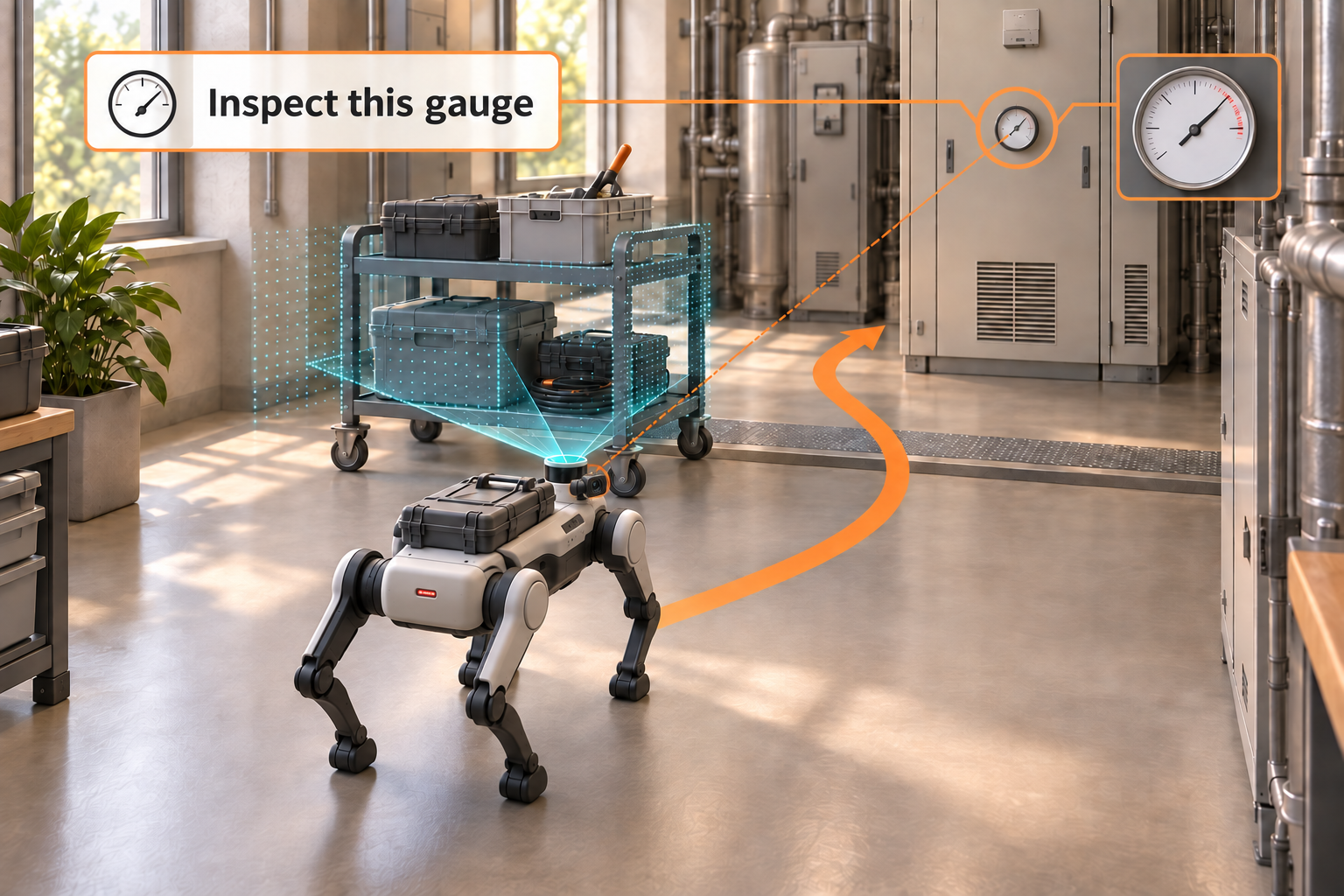
Consider an indoor inspection task: visit a piece of equipment, observe its condition and report anything that needs attention.
A cart blocking the route calls for a new path. A changed inspection target calls for something more: connecting an instruction with the right object and deciding what to observe. Arriving at the destination is only part of the job.
Success means gathering the right observation and recognizing when human help is needed.
Why a robot dog is a useful place to learn
A four-legged platform brings balance, changing ground contact and moving sensors into the same experiment. A small error in actuator response or estimated body motion can affect every step.
Access to the mechanics and control lets us relate those errors to design choices and improve the simulator. We want to understand which physical measurements make a learned behavior transfer more reliably.
The eventual robot for a customer use case should have the body that suits the job. This platform helps us develop the methods to make that choice.
Commercial robot dogs: Spot, ANYmal and Unitree
Commercial quadrupeds put four aspects of deployment into focus:
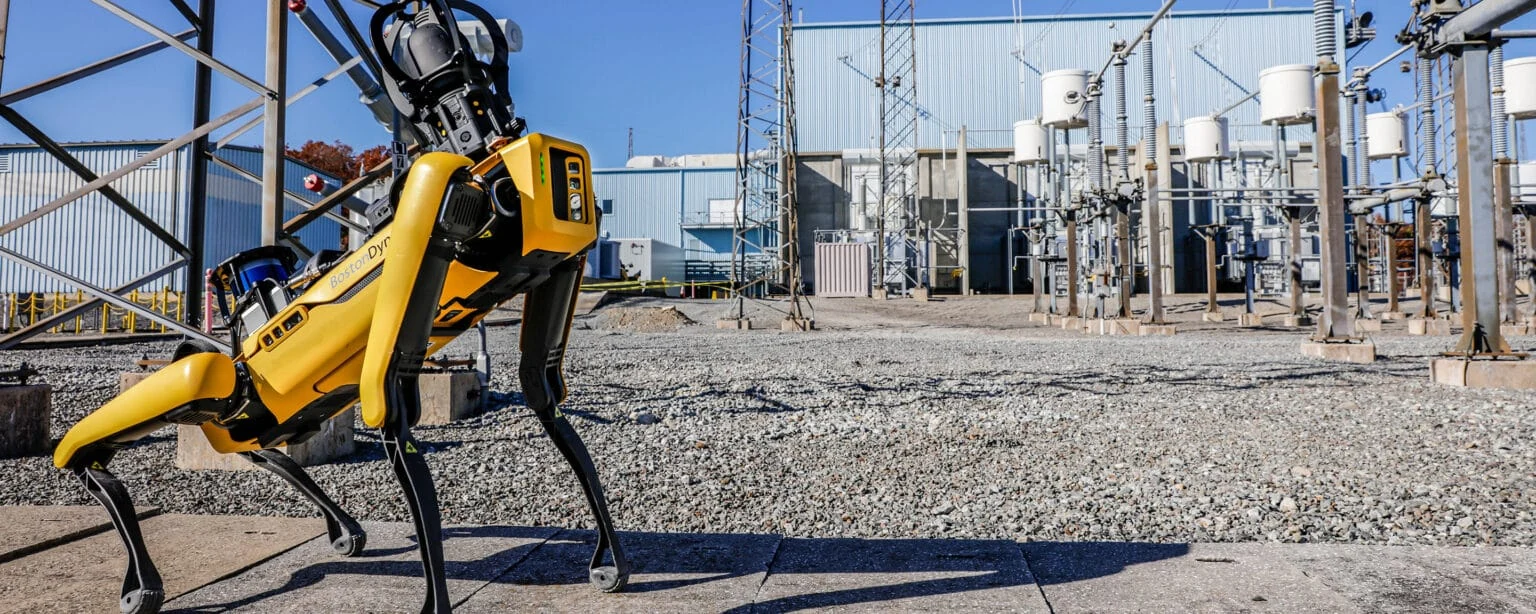
Complete the inspection loop
Autonomous missions, configurable payloads and Orbit fleet management.
Research lens: Measure useful observations and readiness for the next mission.
Image: Boston Dynamics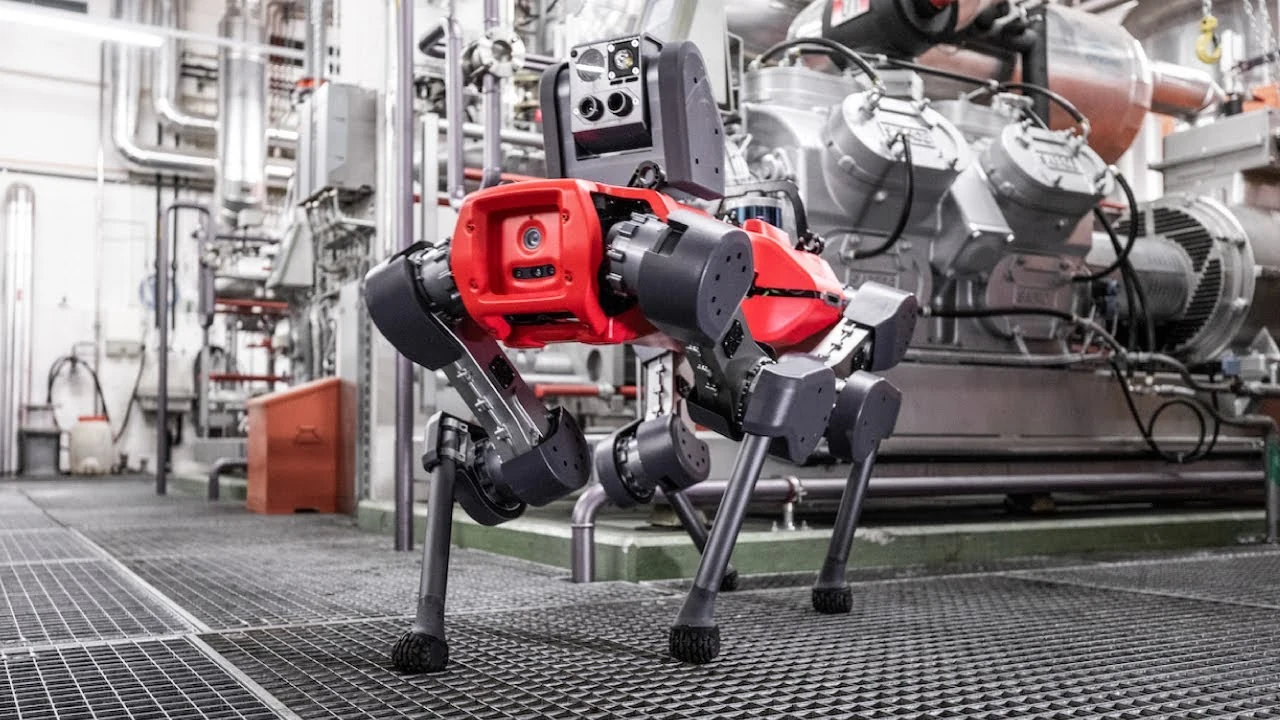
Observe the right condition
Visual, thermal and acoustic inspection with autonomous navigation and docking.
Research lens: Match sensing to the task and check repeatability.
Image: ANYbotics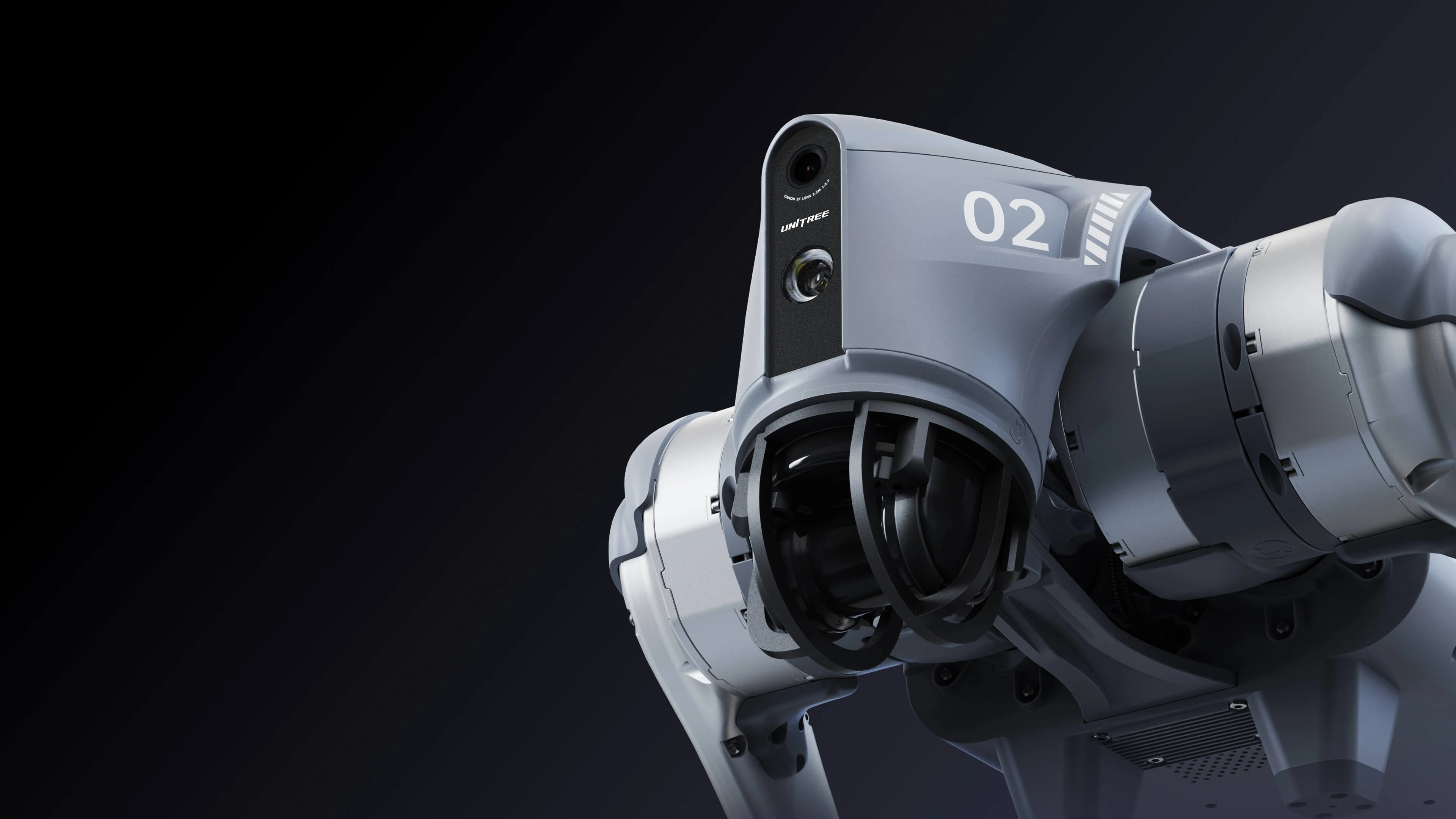
Access the experiment
LiDAR, development support and optional compute expansion; access varies by edition.
Research lens: Check control, sensor and compute access before choosing a platform.
Image: Unitree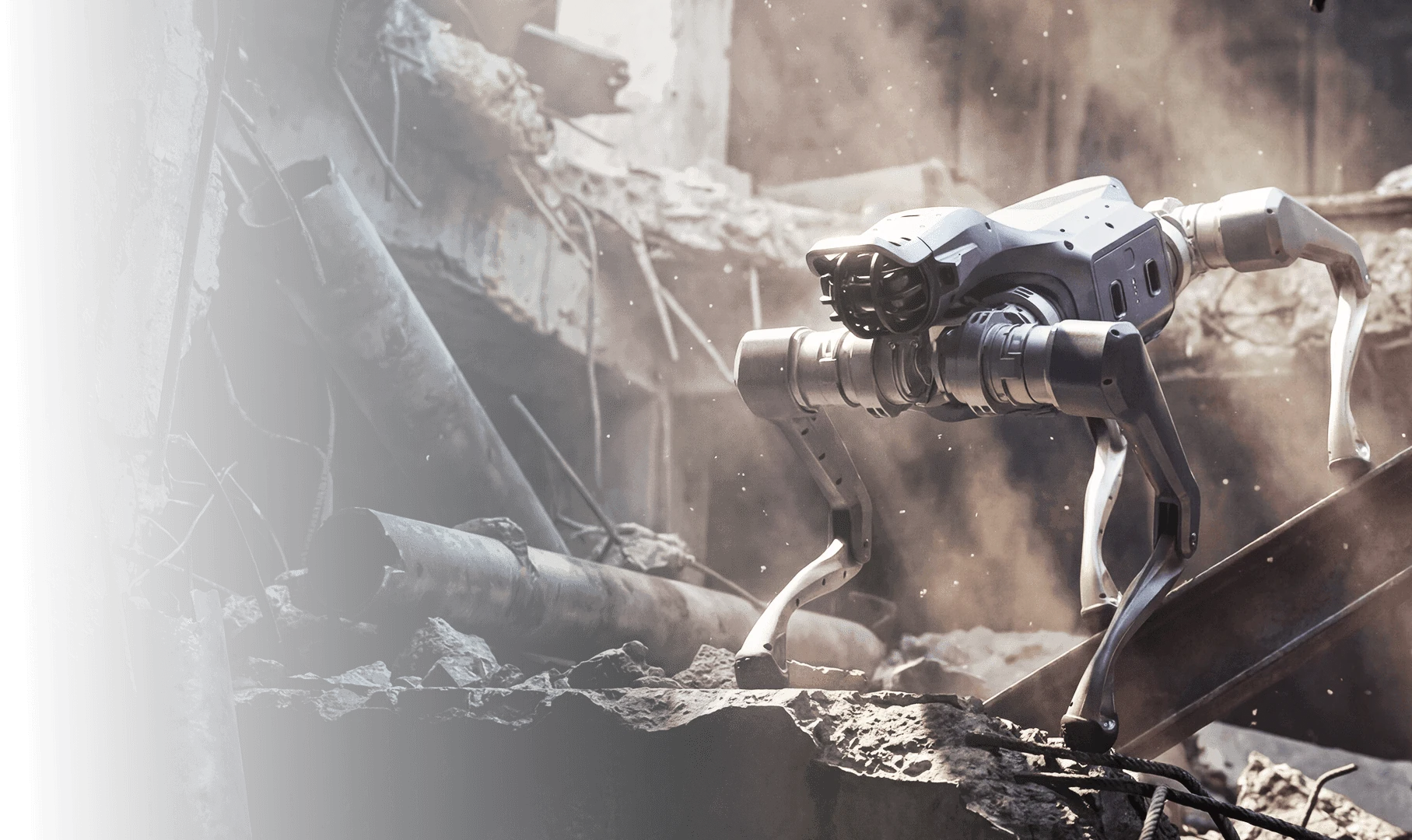
Test the operating conditions
Development support, compute expansion and an EDU dock. Some showcased functions remain in development.
Research lens: Evaluate available capabilities under the intended workload.
Image: UnitreeManufacturer imagery and descriptions, checked September 24, 2026. Product configurations vary; research lessons are our analysis.
Commercial platforms provide valuable mobility and inspection infrastructure. Our reason for building a custom platform is experimental access: we can change a mechanism, measure its response and update its simulated counterpart together.
How the system fits together
Our proposed setup links a PC for inference and navigation with local control on the robot. LiDAR, body-motion sensing and joint feedback connect planned actions to what the machine actually encounters.
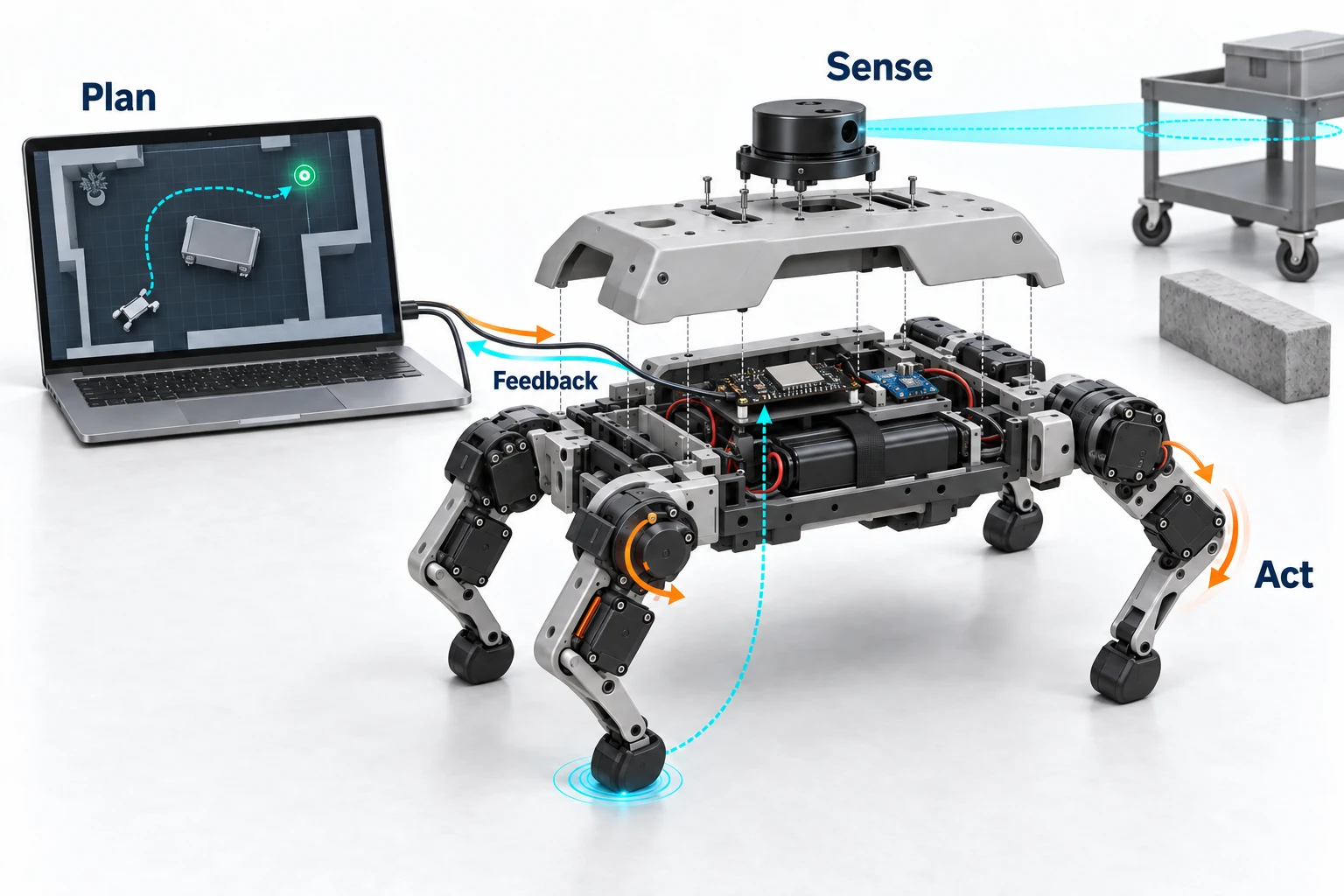
Key integration questions include what state each module needs, how delay affects behavior, and how uncertain observations should change a plan.
Walking should become a reusable capability
“Move to the next checkpoint” and “come closer” should share a movement capability that stays stable as direction, support and floor conditions change.
A locomotion policy must use body and joint feedback to adjust each action when actual movement differs from the request.
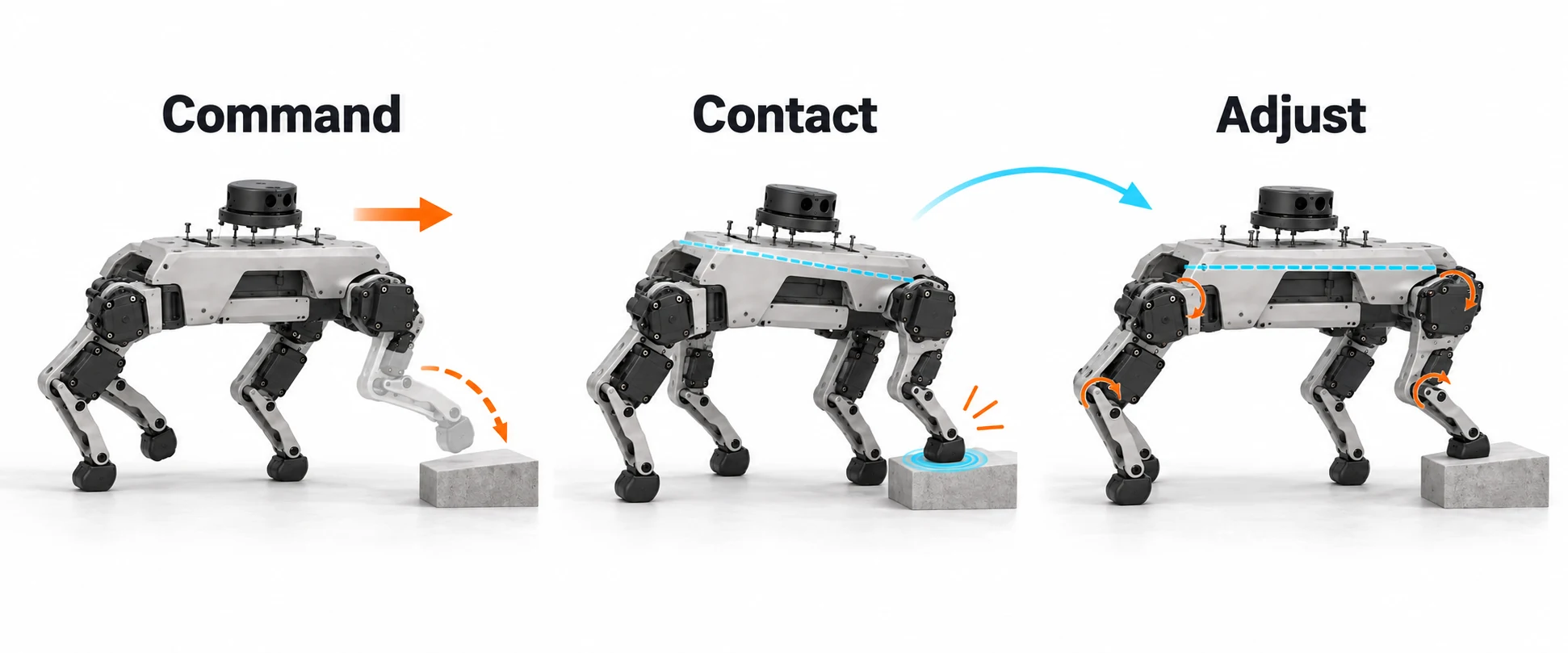
Changed contact, imperfect state estimates and actuator delay are the stresses this capability must withstand.
Navigation connects movement to a purpose
LiDAR-based mapping and localization would help navigation find a route around the cart; the walking capability carries out that movement. Orion’s navigation architecture is one reference for exploring this connection.
Understanding “check that pressure gauge” adds another requirement: identify the relevant object and determine what observation the task needs. Cameras and models that interpret images and language are possible parts of that future system. When the target or route is unclear, the robot needs to recognize that uncertainty and ask for help.
Simulation helps us learn across different conditions
Simulation lets us train and test movement across surfaces and disturbances before repeated physical trials. Reinforcement learning can reward following a requested direction while staying stable.
NVIDIA’s Spot locomotion example illustrates training with varied simulated dynamics and running the resulting policy on hardware.
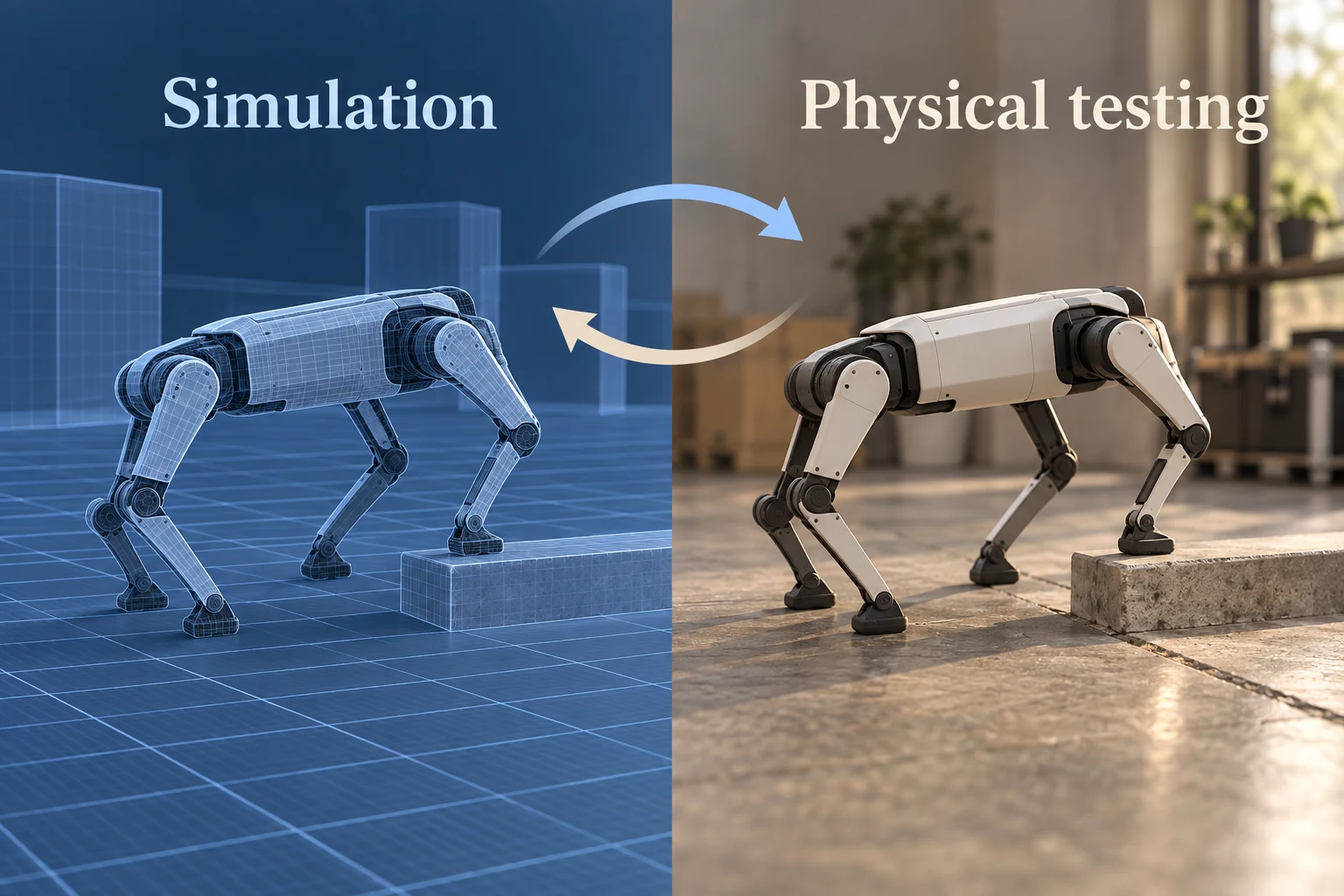
Sim-to-real transfer depends on the model’s errors: simulated feet may grip too well, or actuators respond too quickly. Physical trials reveal those mismatches and provide measurements for the next model revision.
Adaptation should reuse what the robot already knows
Adaptation starts by identifying what changed: the route, the target or the demands on a physical capability.
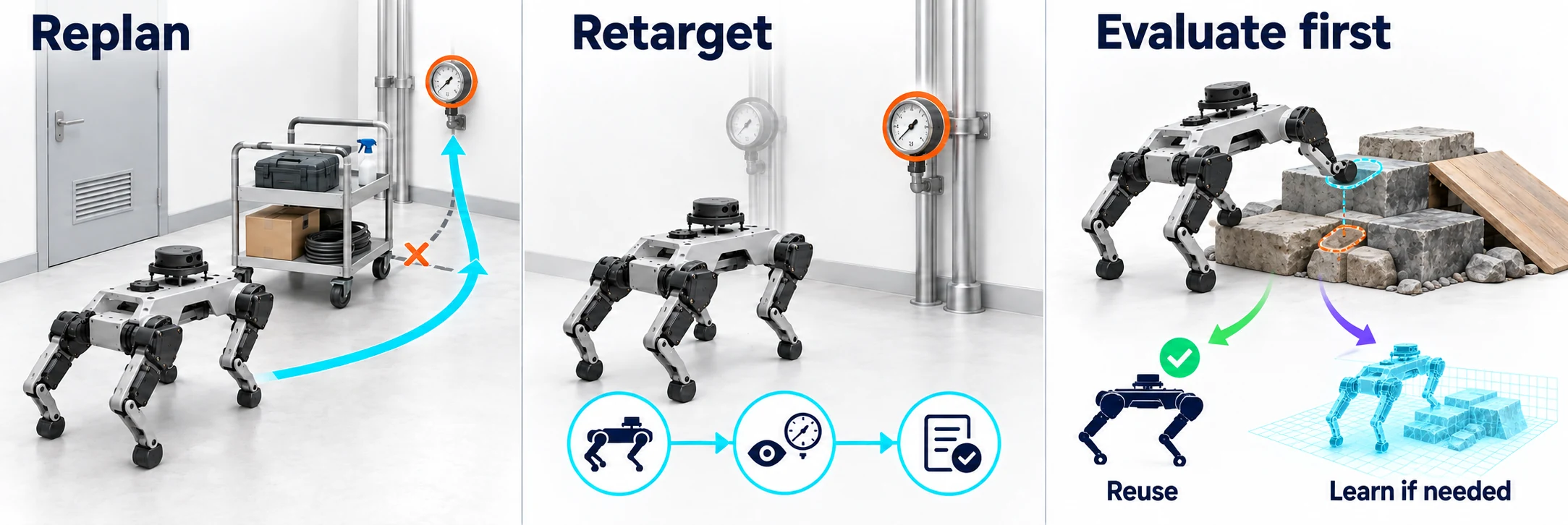
Changing the target can preserve the same action sequence. A task that needs a different sequence requires recomposing skills. Unfamiliar conditions call for evaluation; they do not by themselves establish that retraining is necessary.
Research including Open X-Embodiment and Physical Intelligence’s π0.5 explores learning from broader experience and generalizing to new settings. It informs our direction without establishing that any robot can perform an arbitrary new task.
Research questions we want to investigate
A concrete first question is: which physical measurements make simulation-trained movement more dependable on hardware?
Once a walking platform is available, a proposed comparison would train locomotion policies in the initial simulator and in a version calibrated from measured joint response and ground contact. Keeping the movement task, policy design and training budget comparable would help isolate the effect of that calibration.
Both policies would then face the same physical conditions held out from training. We would compare stable task completion, motion-tracking error and human interventions. That would test whether a better model improves transfer beyond the conditions used to calibrate it.
The wider questions remain how uncertain observations should change a plan, when existing skills can serve a new task, and when the robot should ask for help. These connect controlled experiments with the eventual goal of reliable complete-task behavior.
The project is still at an early prototype stage: digital leg design and electronics choices are prepared; physical walking, integrated navigation and a trained policy for this robot remain to be demonstrated.
Project references: TNY-360 and Orion inform our direction. The leg design adapts TheRobotStudio’s SO101 geometry , with modifications to the base and lower leg, under its Apache 2.0 license .