In this article
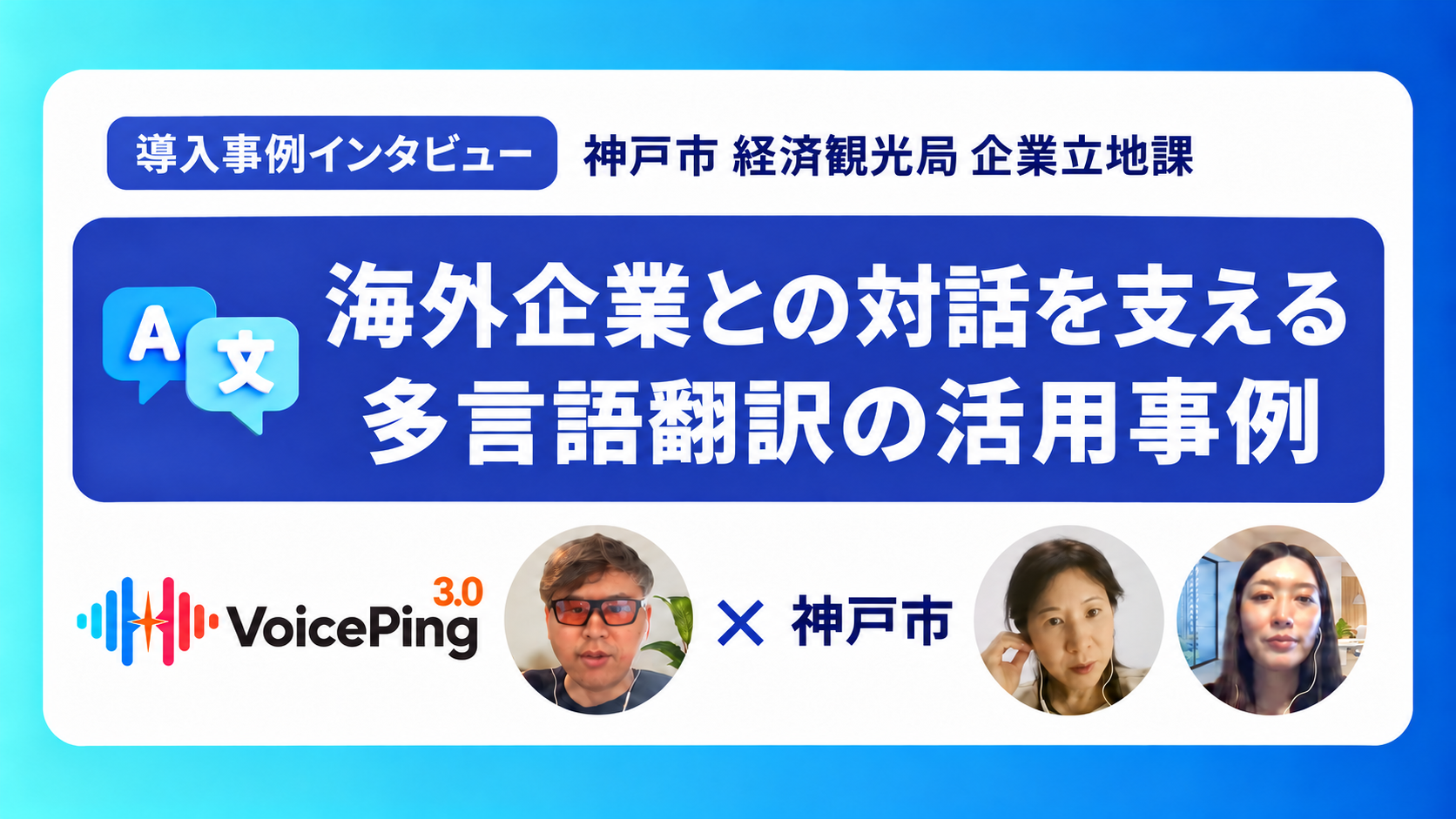
Interviewees: Noguchi and Section Chief Kitaura, Investment Promotion Division, Economic and Tourism Bureau, City of Kobe
Interview date: October 21, 2026
The City of Kobe’s Investment Promotion Division attracts overseas companies, welcomes visiting delegations and connects international startups with local businesses. The team uses VoicePing in multilingual meetings and face-to-face conversations.
We asked Noguchi and Kitaura how they use VoicePing day to day, what they’ve learned about capturing audio at venues, and where they’d like to see more accurate recognition of proper names and better results across languages.
Connecting overseas companies with businesses in Kobe
— Could you start by telling us about your work?
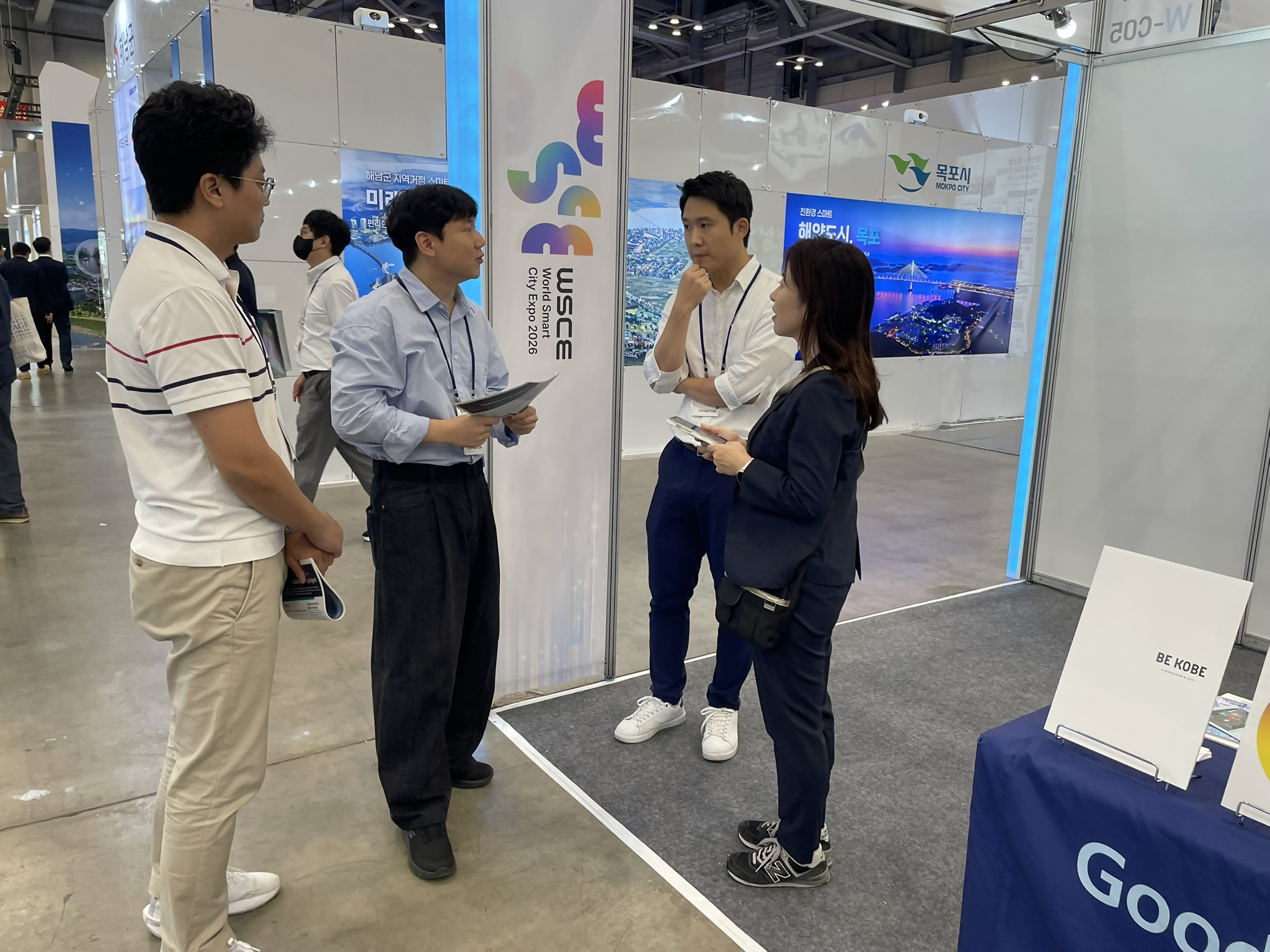
Noguchi: My job is to attract foreign companies to Kobe. We welcome overseas companies for meetings, organize and run events, and host visiting delegations. Connecting overseas startups with businesses here in Kobe has also become a big part of our work. We’re speaking more often with startups, support organizations, government agencies and chambers of commerce from different countries.
— Which languages do you use most often?
Noguchi: Mostly English, but it depends on who we’re talking to. We use Chinese with visitors from Taiwan and Korean with visitors from Korea, for example. We also speak with people from Vietnam and Thailand. Sometimes we can get our point across better if we each speak our own language, especially when neither of us is particularly comfortable in English. I think tools like this can help those conversations flow more naturally.
— When do you find VoicePing particularly useful?
Noguchi: It supports several languages, so it’s a big help when we’re speaking a language other than English. Even in English, specialist discussions can be hard to follow. When time is tight in a meeting, having the VoicePing translation there to check the finer points is especially useful.
Using VoicePing in online and in-person meetings
— So you use it both online and in person?
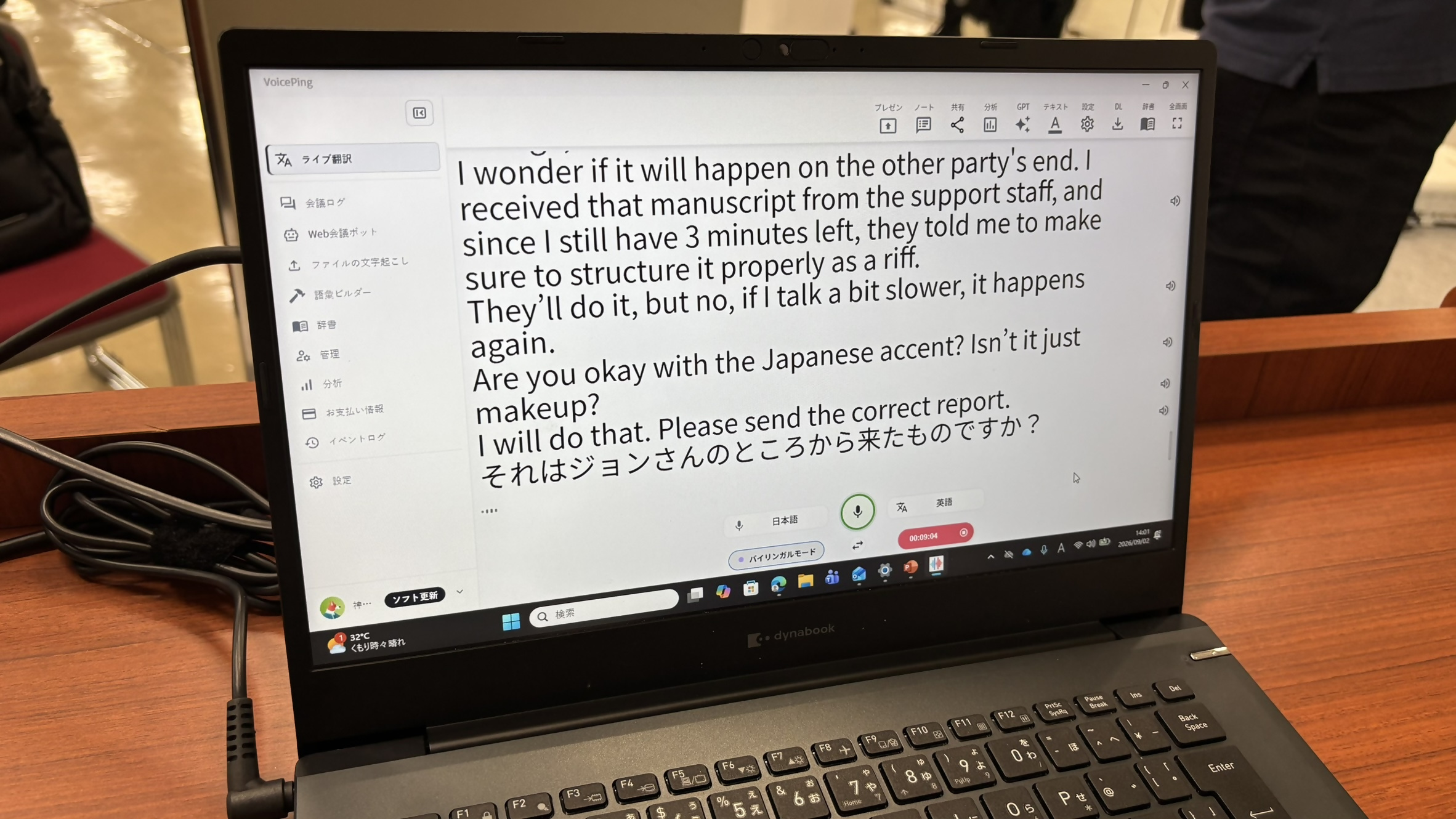
Noguchi: Yes. We often use Teams for online meetings that we host, but that’s not the only setting. In person, I can just open the app and start translating, which is helpful.
Kitaura: I use it in much the same way. We use transcription and translation in our regular meetings. With English, I find the text comes up fairly quickly and accurately.
When to work with an interpreter
— How do you decide when to rely on a human interpreter?
Noguchi: Some of our staff can work in English, and we still ask an interpreter to join us when we need one. We haven’t replaced everything with a tool.
Getting the audio right at the venue
— Could you tell us about a time you used it at an event?
Kitaura: At an event last year, we used it to help Japanese attendees follow a presentation in English. We had a contractor on site who fed the audio directly from the microphone, and I thought the translation came through quite well. Consecutive interpreting takes extra time, so there’s a real benefit to having the translation appear straight away.
Noguchi: On another occasion, we tried showing the screen to visitors and the translation didn’t work so well. We didn’t have a contractor there that time, so the microphone may not have picked up the voices clearly enough. It made me realize how important it is to set up the audio properly at the venue beforehand.
Where accuracy matters: proper names and differences between languages
— As you continue using it, where would you like to see improvements?
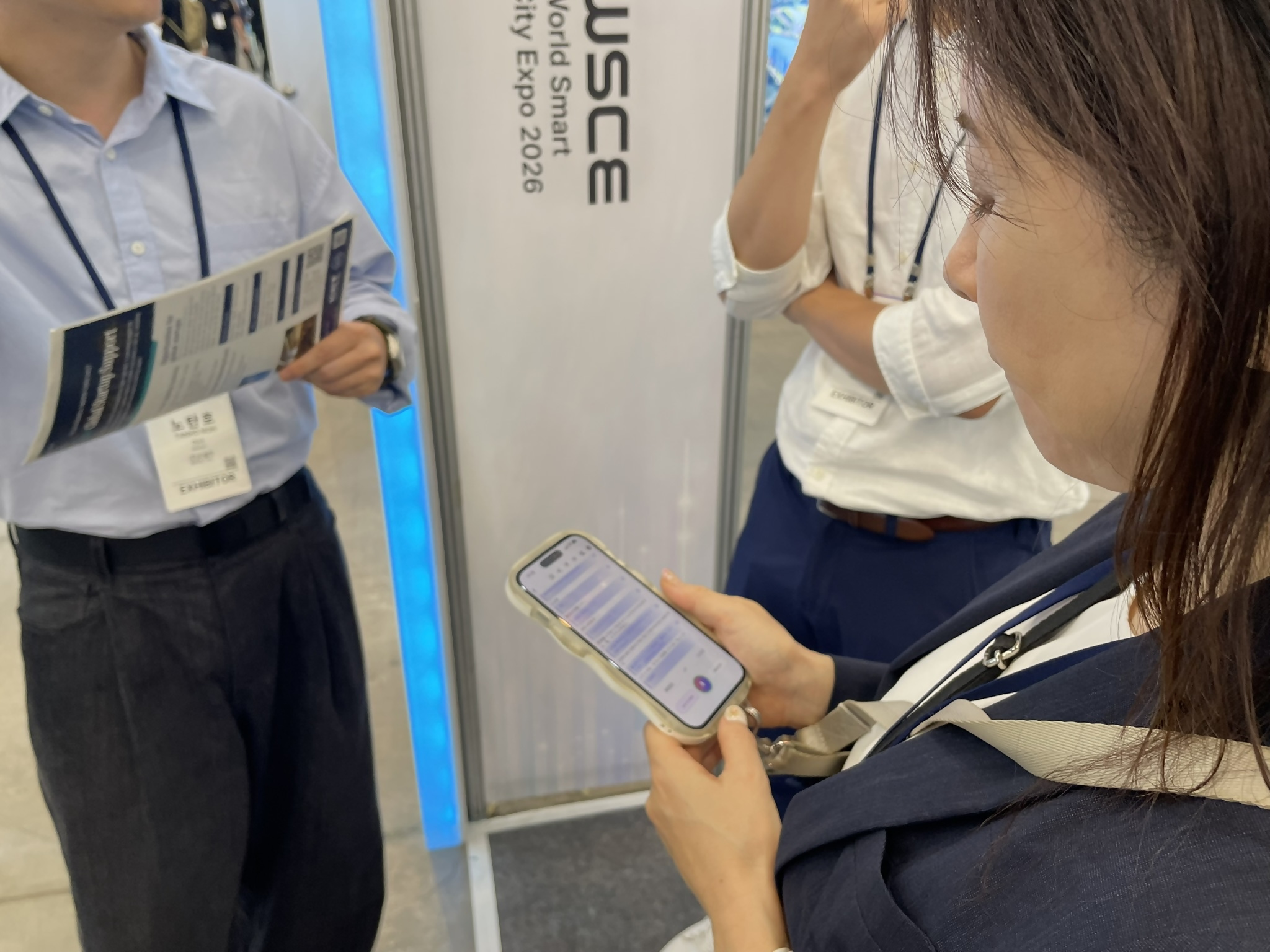
Noguchi: We use the word “Kobe” a lot. Once, when someone said “Kobe” in English, it was picked up as “COVID,” and suddenly the whole translation was about the coronavirus. Even when we add a term to the dictionary, it doesn’t always come through correctly. I’d like it to recognize proper names reliably.
Noguchi: We speak with people from all over the world. It’s not just people from the UK or the US who speak English in our meetings; we hear English from people in France, Italy and many other countries. I wonder whether differences in pronunciation sometimes make recognition more difficult.
Kitaura: In languages other than English, it can be hard for us to judge the accuracy of the translation ourselves. In Chinese and Korean, though, I’ve sometimes looked at where a sentence breaks and wondered whether the meaning came across as intended. I’d like the translation to read more naturally, including the way one phrase connects to the next.
In response to this feedback, VoicePing explained its recent speech recognition model update during the interview.
Trying voice interpreting in day-to-day work
— What did you think of the web meeting bot and voice interpreting features you saw today?
Noguchi: I wasn’t sure how to use the web meeting bot or what it could do at this point. Now that I’ve seen it and know the feature is there, I’d like to try it myself.
During the interview, we showed the bot’s interpreting mode and how to listen to a translation aloud on a smartphone. We also explained that, for offline use, the relevant models need to be downloaded in advance. These were features the team was considering for future use.
— Looking ahead, how would you like to use translation in your conversations?
Noguchi: We meet people from overseas often, so being able to talk to each other in our own languages is something I’m looking forward to. Whether we’re in a meeting or talking face to face, I’d like it to be easier for both sides to understand each other.
The team uses translation in everyday meetings to better understand the people across the table. Working through practical questions such as audio input and accuracy in different languages is part of how Kobe’s Investment Promotion Division continues to use VoicePing in its conversations with overseas partners.
About the City of Kobe’s Investment Promotion Division, Economic and Tourism Bureau
Main responsibilities: Attracting companies to Kobe and helping businesses stay in the city, among other activities.
Address: 7th floor, Sannomiya Building East, 6-1-12 Goko-dori, Chuo-ku,
Kobe, Hyogo 651-0087, Japan
Official website: Invest in Kobe — https://investkobe.com/
Interview contributors: Noguchi and Section Chief Kitaura (October 21, 2026)


