In this article
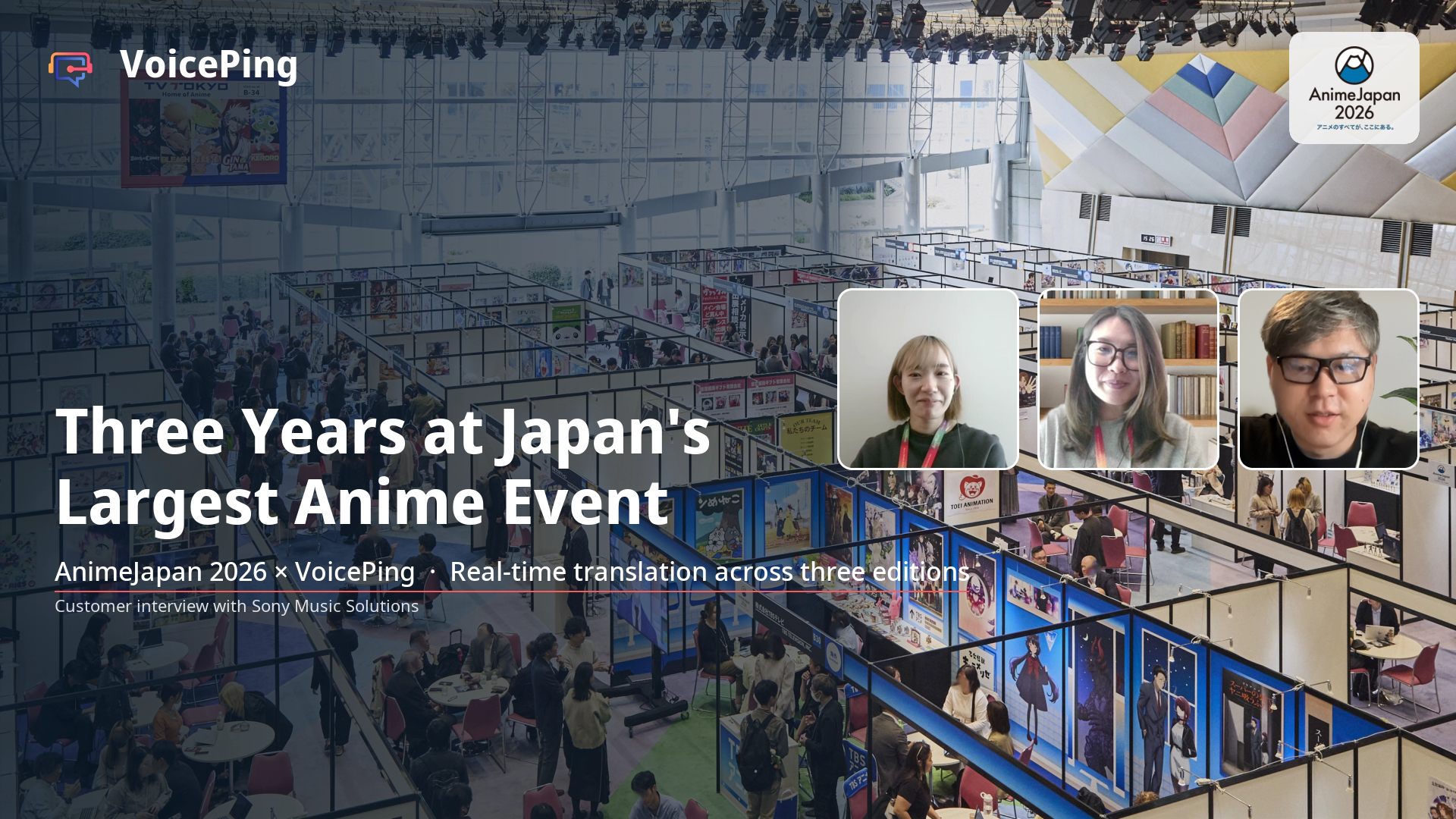
How do you make Japanese-language Business Days seminars accessible to visitors from overseas? AnimeJapan is one of Japan’s largest anime events, and its Business Days attract many international industry professionals. With most speakers presenting in Japanese, multilingual access has been a recurring challenge. To address it, Sony Music Solutions Inc., which runs the AnimeJapan secretariat, has used VoicePing’s real-time AI translation for three consecutive years.
We spoke with Okada and Oide from Sony Music Solutions about how VoicePing was used at AnimeJapan 2026 Business Days, what has changed over those three years, and their hopes for future multilingual support.
For more background, see our AnimeJapan 2024 and 2025 interviews.
AnimeJapan 2026: One of Japan’s Largest Anime Events at Tokyo Big Sight
— Could you introduce yourselves and tell us about your roles at AnimeJapan 2026?
Okada: I’m Okada from Sony Music Solutions Inc. AnimeJapan consists of Public Days for general visitors and Business Days for industry professionals. I oversaw the Business Days as a whole, including on-site operations, business seminars, pitches, and coordination with exhibitors.
Oide: I’m Oide, also from Sony Music Solutions Inc. I worked with Okada on the Business Days, helping visitors and buyers find their way and coordinating the seminars.
— Could you give us a sense of the scale of AnimeJapan?
Okada: This was the 13th edition of AnimeJapan, one of Japan’s largest anime events. I don’t think there are many anime events anywhere in the world that bring together this many exhibitors and visitors. Both attendance and exhibitor numbers for this year’s Business Days were up on last year, and the event felt even more lively than usual.
— What about total visitor numbers?
Okada: Combined attendance across this year’s Public Days and Business Days reached a record 156,000. We have also seen more visitors coming from overseas in recent years.
More International Visitors, a Growing Need for Multilingual Support
— What challenge were you trying to address, and why did you choose VoicePing?
Okada: The Business Days attract many visitors from overseas, so we need to support people from different countries. The seminars in particular are generally delivered in Japanese, even though many attendees are international. We felt multilingual support was essential, which is why we approached VoicePing. We have now used it for three consecutive years, starting in 2024. Positive feedback from visitors was one reason we continued.
Three Years of Improvements to Screen Layout and Timing
— How have visitors responded over the past three years, and how has the display changed?
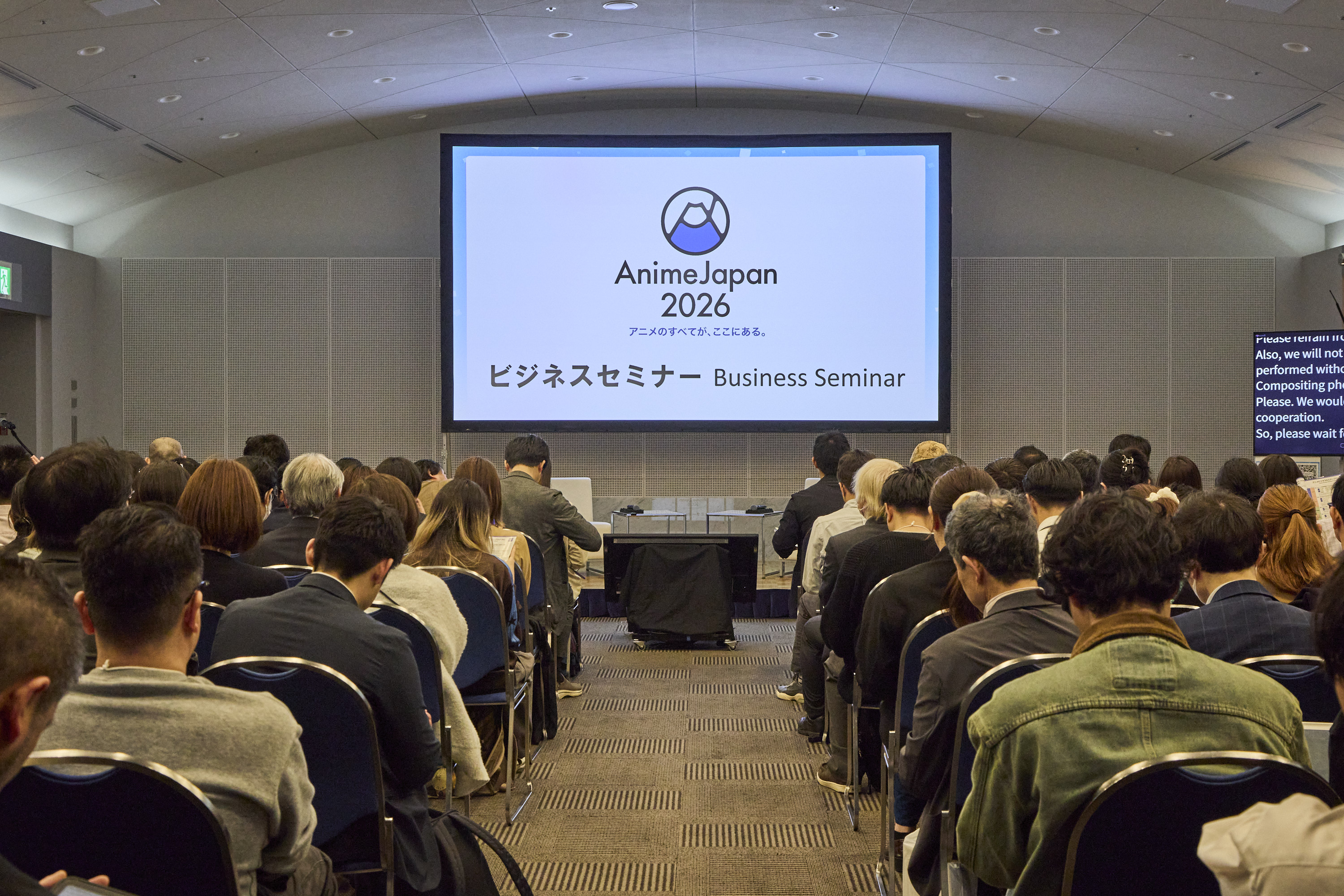
Okada: In the first year, we displayed Japanese in the upper half of the screen and the English translation below it. The English text had limited space and was a little hard to read, so from the second year onward we switched to an English-only display.
The other issue was the timing of the translated text. Japanese and English have different word orders. When an English translation appeared immediately, before the Japanese sentence had finished, it would be revised repeatedly as the speaker continued. That made it difficult to follow. We still saw this last year, so we asked for the display to be slowed slightly, allowing the translation to settle before appearing. From what I saw this year, it seemed better than last year.
— Thank you. At VoicePing, we are continuing to refine the translation model, with the aim of reducing mid-sentence revisions and flickering text.
“You Can Check It on Your Smartphone”: Convenience for Visitors
— Did you receive any feedback about scanning the QR code and viewing translations on personal devices?
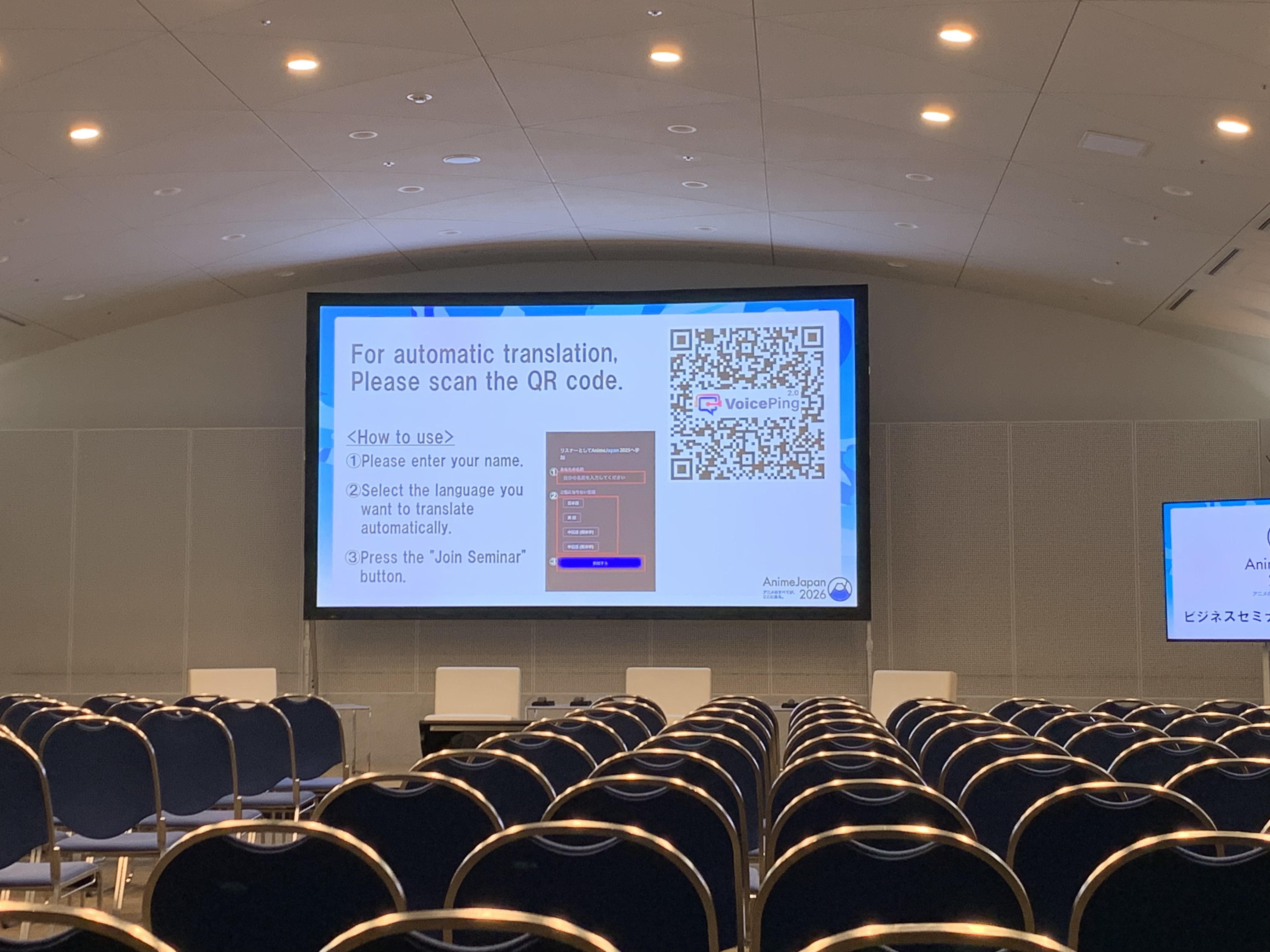
Oide: We haven’t heard anyone say they couldn’t use it or had trouble with the QR code, and our on-site staff didn’t report any particular issues either. I also saw people using it at the venue. Visitors who appeared to be from overseas were taking notes while reading the translations on their smartphones. I think being able to check the translation on their own devices worked very well.
A More Economical Option Than Hiring Interpreters
— How did the cost compare with arranging human interpreters?
Okada: I do think it is economical. Labor costs are rising, and assigning interpreters across the Business Days operations or to each seminar would be quite expensive. Cost was one of the reasons we chose it.
Titles and Proper Nouns: Improvements During the Event
— You registered proper nouns in the dictionary beforehand. Did you notice any issues with recognition or their English translations?
Oide: I didn’t notice anything particularly odd with the proper nouns. There were cases where a term appeared early in the translation and then was expressed better later in the same session—as though it had learned from the earlier usage. I feel the accuracy is improving.
What Comes Next: Speaker Labels, More Languages, and Audio
— What would you like to see from the translation experience in the future?
Oide: In terms of speed and smoothness, it would be easier to grasp the meaning at a glance if sentences appeared cleanly in one go, with fewer revisions caused by differences in word order. Even on a large screen, you can only display about six or seven lines, so sometimes the text moved on before a sentence was complete. I expect that will continue to improve.
There were also sessions with two speakers this year. If the screen could show who was speaking—even just A and B—I think people could follow the conversation more closely without having to work out whose words they were reading.
When it comes to anime, visitors from overseas are not only English speakers. They come from a wide range of language backgrounds. The more languages these systems can support, the more important they will become.
— Do you think there would be interest in listening through earphones rather than reading the text?
Okada: We haven’t received any specific requests for that. But since people are already using their smartphones, I think being able to listen through earphones could make the content easier to understand.
Key Takeaways
- VoicePing was used for AnimeJapan Business Days seminars for three consecutive years, from 2024 to 2026.
- Live English captions on venue screens and QR-based access on smartphones, with no app required, supported international visitors during two days of seminars on March 30–31.
- The display evolved each year: from a split Japanese–English layout, to English only, to better handling of differences in word order.
- No particular QR-code issues were reported. Dictionary entries and the improvements observed during sessions helped with proper nouns.
- Multilingual access to seminars was provided more economically than by arranging human interpreters.
- Future requests include on-screen speaker labels (A/B), more supported languages, and translated audio through earphones.
Company Profile: Sony Music Solutions Inc.
- Established: August 21, 1987; launched in its current form on April 1, 2019.
- Headquarters: Midtown Tower, 9-7-1 Akasaka, Minato-ku, Tokyo, Japan.
- Business: Marketing, distribution, and e-commerce for music and video content; planning and manufacturing of packaged products; logistics; fan club operations; merchandise production and sales; planning, production, and operation of live events and exhibitions; and planning, production, and operation of web applications, digital signage, and related services.
- Official website: Sony Music Solutions Inc.
Bring VoicePing’s Real-Time Translation to Your Next Event
VoicePing brings real-time translation to seminars and presentations, helping international visitors follow what is being said.
- Just scan a QR code — Visitors can read real-time translations on their own smartphones, without installing an app.
- Display captions on venue screens — Translated captions on an additional seminar screen help attendees follow the presentation.
- Straightforward for organizers, too — Terminology registration and an event-day operating plan help tailor multilingual support to the size of the venue.
Explore VoicePing’s event solutions.
This article is based on an interview with Okada and Oide of Sony Music Solutions Inc. on May 8, 2026. Their comments have been lightly edited for clarity.